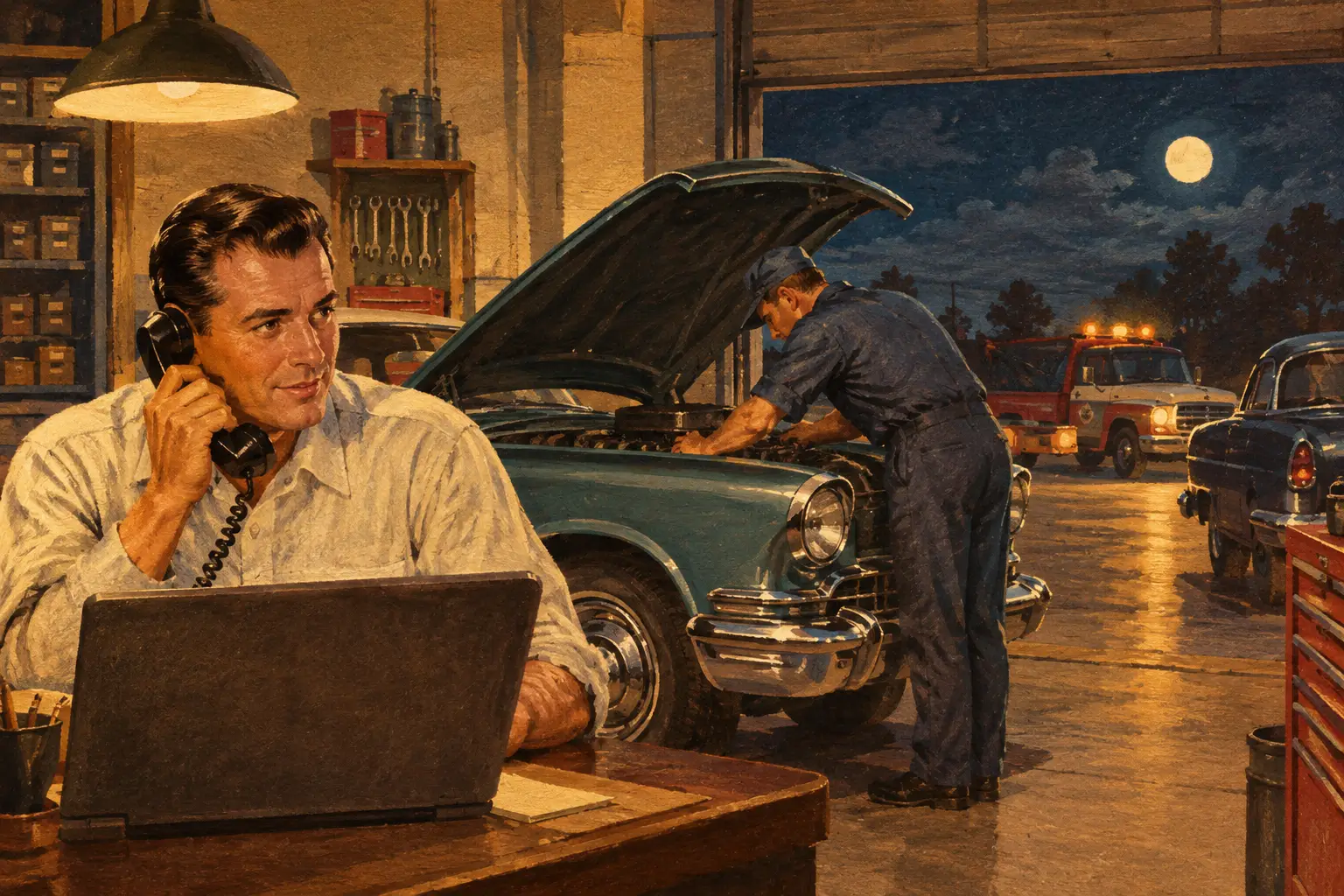
A customer hears a new grinding noise at 7:40 p.m., pulls into the driveway, and calls the first repair shop that answers. If your voicemail picks up, that job may already be booked somewhere else by morning. The best after-hours support for shops does more than record a name and number. It handles the call like a capable service writer: gathering the right details, setting expectations, and putting the caller on a clear path to an appointment.
For an independent repair shop, after-hours coverage is not about pretending you are open 24/7. It is about making sure a real opportunity does not hit a dead end when the bays are closed.
What After-Hours Support Needs to Do
A generic answering service can tell callers that the shop is closed. That is better than silence, but it is not enough to protect your front desk or grow your schedule. Your after-hours coverage should know the difference between a caller asking for an oil change, a customer reporting a no-start, and someone trying to get a quote for work you do not perform.
The right setup starts by collecting useful information: the vehicle year, make, model, the problem, whether the vehicle is safe to drive, and the caller’s preferred contact information. It should also recognize when not to overpromise. No one should be quoted an exact repair price for a check-engine light or told they can have same-day service when your calendar is already packed.
That is the first test when comparing options. Can the service follow your actual shop rules, or is it working from a loose script built for every kind of local business?
The Best After-Hours Support for Shops Follows Shop Rules
Every shop has its own operating reality. Maybe you do not install customer-supplied parts. Maybe you do not work on European vehicles, diesel trucks, or hybrids. Maybe towing calls need a different process than appointment requests. A useful after-hours system needs those rules before the first caller reaches it.
It also needs a booking process that matches how your service department works. Some shops want after-hours callers placed into open appointment windows. Others want every next-day request captured for a service writer to confirm in the morning. Both approaches can work. The wrong move is letting an automated system fill your calendar without guardrails.
Good support can ask practical follow-up questions without turning a customer call into an interrogation. For example, a caller saying, “My brakes are making noise,” may need to be asked whether the brake pedal feels soft, whether there is a warning light, and whether the noise is grinding. That information helps your team prioritize the call when the shop opens. It does not diagnose the vehicle over the phone.
It knows when to escalate
Some calls should never be treated as ordinary leads. A customer describing smoke, a possible fuel leak, a vehicle that will not stop properly, or a roadside breakdown needs clear, safe guidance. The caller may need towing information or instructions not to drive the vehicle, not a cheerful appointment prompt.
The same goes for upset customers. If someone is calling about a repair concern, warranty question, or a vehicle that was just picked up, the after-hours response should acknowledge the issue, capture the facts, and route it for follow-up. It should not argue, speculate, or make promises your manager has to unwind the next morning.
Choose the Coverage Model That Fits Your Shop
There are three common ways shops handle calls after closing: voicemail, a live general answering service, or an automotive-focused AI receptionist with defined handoff and booking rules.
Voicemail costs the least, but it leaves the work on the customer. Many callers will not leave a detailed message, especially when they are stressed or comparison shopping. It also creates a morning pile of callbacks, when your service writers are already checking in vehicles and answering new calls.
A live answering service can give customers a human voice, which can be valuable for certain shops and high-touch situations. The trade-off is consistency. If the operator does not know your service exclusions, scheduling limits, or the questions your team needs answered, your staff still has to sort through incomplete messages later.
A shop-specific AI receptionist sits in the middle ground for many independent shops. It can provide immediate, consistent coverage while following the call logic you set. The key phrase is shop-specific. An AI agent that merely sounds polished but does not know your booking window, inspection policy, or services is just a nicer version of voicemail.
What to Ask Before You Turn It On
Do not buy after-hours coverage based only on a demo voice. Ask how it will handle the messy calls your shop gets every week.
Start with the basic operating questions. Can it book within the rules you set? Can it collect vehicle and symptom details? Does it know which services you do not offer? Can it distinguish a request for an estimate from a request to schedule diagnostics? Can it send your team a clean call summary before the next shift?
Then test the edge cases. Ask what happens when a caller wants to drop off a car after hours, needs towing, has a warranty concern, speaks about a safety issue, or asks for a manager. A capable provider should be able to explain the exact call path, not just say the system is “smart.”
You also want control after launch. Your shop changes. A tech leaves, your alignment rack goes down, your schedule tightens before a holiday weekend, or you decide to stop taking a certain kind of work. After-hours support should be easy to tune as your operation changes. If updating call rules takes weeks or gets lost in a ticket queue, it will eventually create headaches.
Review real calls early
The first few weeks matter more than the sales demo. Review actual call recordings or summaries with your service team. Look for missed questions, awkward wording, bad assumptions, and booking patterns that do not match the way your shop operates.
This is where specialized setup earns its keep. Ratchet Call maps call scenarios before launch, configures your service knowledge and scheduling rules, then tunes the system from live-call results. That approach is built for the reality that a shop’s phone process is never just, “Take a message.”
Measure More Than Call Volume
A busy phone line does not automatically mean useful coverage. Track how many after-hours calls become qualified appointments, how many need a morning callback, and how often your team has to correct a booking or explain a misunderstanding.
You should also pay attention to interruption reduction. If the service writer starts each morning with organized call details instead of a string of vague voicemails, that is operational value. If technicians and owners are no longer pulled off productive work to answer phones during the day because the same system also handles overflow, that matters even more.
The best result is not a robot that talks a lot. It is fewer lost leads, cleaner handoffs, and a front desk that starts the day ahead instead of behind.
After-Hours Coverage Should Feel Like Part of the Shop
Customers do not care whether a call is answered by a person in the building, an outside service, or an AI receptionist. They care whether they get a clear answer and feel like the shop understands their problem. A caller with a dead battery does not need a speech about technology. They need to know what happens next.
That is why voice, judgment, and boundaries all matter. Your after-hours support should sound professional without being stiff, stay helpful without guessing, and book work without creating promises your bays cannot keep. When it is set up correctly, the caller gets a better experience and your team gets better information.
The right first step is to write down the calls you wish your front desk handled better after closing, then build the coverage around those exact situations.
Shops can hear it firsthand by calling the live demo line: (615) 558-5787.