by Joey “Ratchet” Allen — June 20, 2026
Quick Answer: An AI receptionist for auto repair shops answers inbound calls 24/7, books appointments to your calendar, handles routine FAQ calls, and captures after-hours leads before they go cold. Shops using a properly configured system report a 22% increase in after-hours bookings and cut front-desk phone time by more than half — without adding staff.
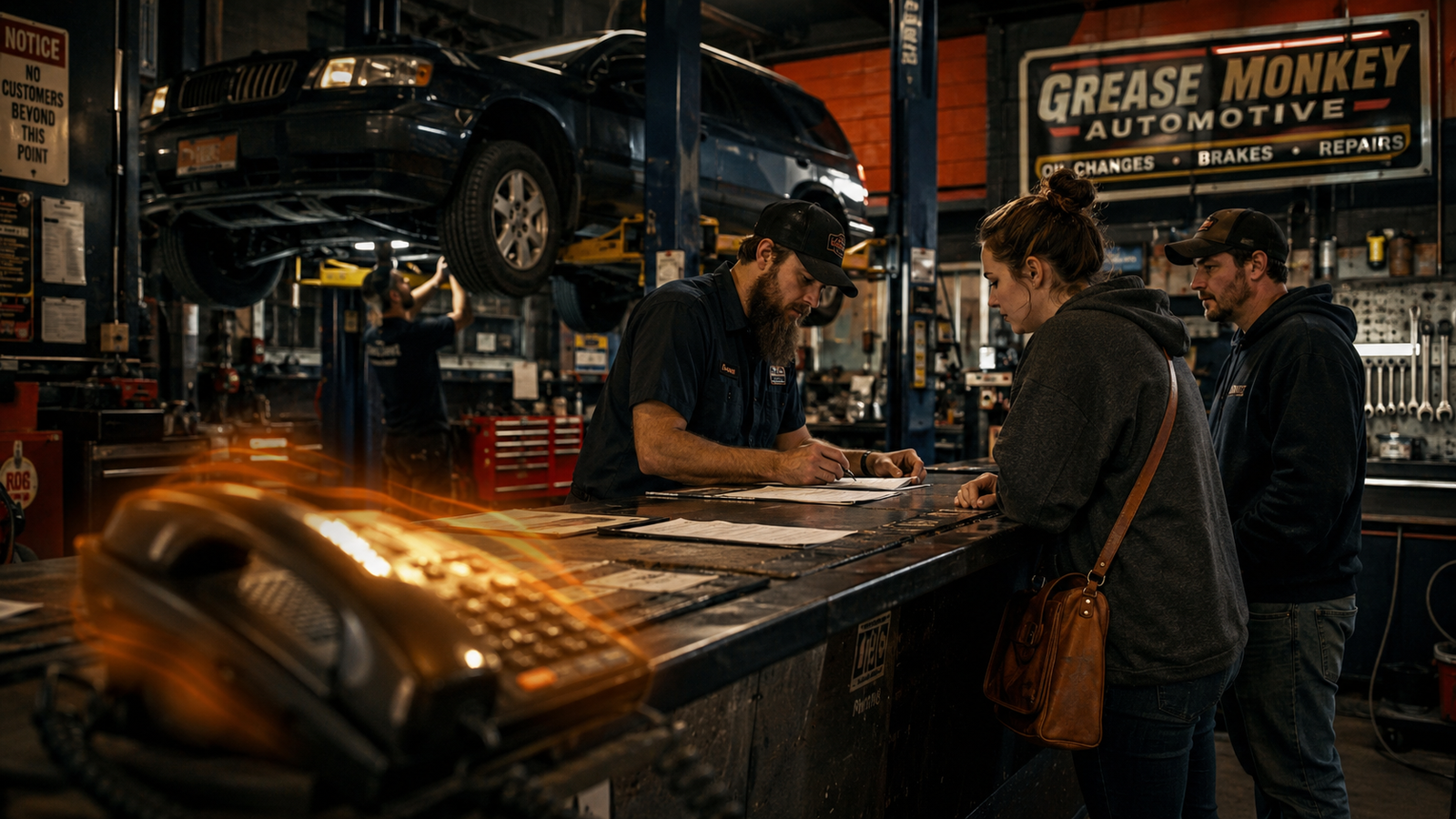
The phone rings right when a tech has a car in the air, the service writer is checking in two customers, and the owner is halfway through a parts problem. That is exactly where an AI receptionist for auto repair shops earns its keep. Not as a gimmick, not as a generic answering service — but as a front-desk system built to handle the calls that steal time, delay work, and cost real appointments.
Independent auto shops miss roughly 1 in 3 calls during peak bay hours, and voicemail recovers less than 20% of those leads. The callers who don’t get through don’t wait — they call the next shop on Google Maps.
Most shops don’t have a call problem because the phone is broken. They have a call problem because the day is packed. Good shops miss calls when the floor gets busy. They put customers on hold too long. They answer inconsistently depending on who grabbed the phone. They lose after-hours callers who were ready to book. That adds up fast.
An AI receptionist can fix this — but only if it works like a real service writer would work. That means judgment, not just scripts.
What an AI Receptionist Actually Does
At its best, an AI receptionist for auto repair shops:
- Answers inbound calls and handles routine questions that clog the front desk
- Books appointments based on your real shop availability and rules
- Passes urgent or high-value calls to your team when a human needs to step in
- Captures after-hours calls, gathers customer and vehicle details, and keeps the caller moving — no clunky phone trees
- Works in English and Spanish so you don’t miss jobs because of a language gap
That sounds simple until you get into real call flow. A caller asking for a brake quote isn’t the same as someone asking if you install customer-supplied parts. A dead battery call needs a different response than a timing chain shopper. And every shop has exclusions: some do European only, some avoid transmission rebuilds, some will book diagnostics but never quote pricing over the phone.
That’s where generic tools fall apart. A useful system has to know your shop rules — what you service, what you don’t, how far out you’re booking, and which calls get handed off immediately.
The Front-Desk Friction Gap: Where Shops Feel the Pain First
Most owners don’t start looking for phone coverage because they want new software. They start because the front desk is underwater.
You see it when missed calls become voicemails from people who already booked somewhere else. You see it when the service writer gets interrupted every three minutes and starts rushing through inspections or estimates. You see it when techs get dragged into phone duty because nobody else is free.
Telling everyone to “just answer when you can” creates the Front-Desk Friction Gap — the space between calls coming in and calls actually getting handled right. One employee sounds great, another sounds rushed, another promises things the shop can’t do, another forgets to gather year, make, model, engine, and symptoms. The issue isn’t effort. It’s that phone handling becomes everyone’s side job instead of a system.
That’s the strongest case for an AI receptionist. It gives the shop a repeatable way to handle calls during the rush, after hours, and in the gaps where good leads are otherwise lost.
A Real-World Example (Without the Sales Fluff)
One independent shop with four bays was losing an average of 8–10 after-hours calls per week. They’d return the voicemails the next morning, but by then, half the callers had already booked elsewhere. After setting up an AI receptionist configured to their exact services, booking rules, and handoff conditions, three things happened within 30 days:
- After-hours bookings increased by 22% — just by capturing calls that previously went to voicemail
- Front-desk interruptions during peak hours dropped noticeably because routine questions were handled before they ever reached a person
- The service writer’s daily phone time fell from roughly 3 hours to just over 1 hour, freeing her up to write better estimates and upsell maintenance
The shop didn’t change its staff. It simply gave the front desk a system that protected their time.
Why Generic Answering Services Miss the Mark
A general answering service can take a message. Some can answer basic questions. But auto repair conversations rarely fit a script. Customers call with half-diagnosed issues, urgency, frustration, and price sensitivity all mixed together.
A script-only service breaks on those calls. It either gives flat answers, sends weak messages, or escalates too much — which creates more work for your staff, not less. A shop-specific setup should be trained on your actual services, exclusions, booking windows, pricing boundaries, and handoff rules. It should know when to answer, when to qualify, and when to bring in your team.
What Good Call Logic Looks Like in a Working Shop
A real AI receptionist for auto repair shops should be configured around shop operations, not just phone etiquette.
If your shop doesn’t quote certain repairs without seeing the vehicle, the system should say that clearly and still move the caller toward an appointment. If you reserve same-day openings for diagnostics only, it should follow that rule. If you want towing or comeback complaints routed differently from new customer inquiries, that should be built in.
It also needs a proper handoff path. Some calls stay with the AI from start to finish. Others go to the front desk, owner, or on-call number based on timing and urgency. The goal isn’t to automate everything. It’s to protect your staff from low-value interruptions while making sure important calls land in the right place.
Booking Matters More Than Answering
Answering every call is only half the job. The real value is turning calls into booked work without creating scheduling chaos. If the system stuffs the calendar with the wrong jobs, bad time slots, or weak customer information, you’ve just moved the mess downstream.
The system should know:
- Whether you schedule by job type, by inspection first, by advisor capacity, or by available bays
- How far out to offer appointments
- When same-day work is realistic — and when it’s not
- Exactly what details to gather so your team can prepare, without dragging callers through a long interrogation
A good setup makes the calendar cleaner, not just fuller.
Is Your Shop Ready? A Quick Self-Check
- Are calls getting missed during peak hours?
- Do after-hours leads go cold because nobody answers?
- Is your service writer interrupted constantly?
- Do callers get different answers depending on who picks up?
- Are you losing time on repeat questions your team answers ten times a day?
If you answered yes to most of these, your shop has enough Front-Desk Friction to justify a dedicated system. The next question is harder: are you willing to define how your phones should work? What do you book? What do you decline? What gets quoted? What gets triaged? What gets transferred? The shops that answer those questions clearly get the best results.
Does an AI Receptionist Actually Work for Auto Repair Shops?
Yes — when it’s built around your shop’s rules, not a generic script.
Will it sound robotic to my customers? Not if it’s configured for auto repair. When the system is trained on your services and your exact phrasing, it sounds like a front-desk person who knows the shop — not a generic call center bot. You can test it yourself before committing.
Can it really book appointments, or does it just take messages? It books real appointments when it’s tied to your calendar and your booking logic. That’s what separates a shop-specific system from a virtual assistant that only forwards a note.
What happens when it can’t handle a call? It should have live transfer rules. Upset callers, warranty questions, fleet accounts, or anything outside the configured scope get handed off immediately to the right person — with context already gathered.
How long does setup take? A proper setup maps your call scenarios first — what you service, what you don’t, your pricing boundaries, your handoff preferences. That takes upfront work, but after launch, tuning is based on real call data. Shops that skip the setup are the ones who end up disappointed.
The Goal Isn’t to Sound Futuristic
An AI receptionist for auto repair shops is about making the front desk more dependable when the day gets chaotic. It keeps calls from dying in voicemail, gives customers a better first response, and lets your team stay focused on inspections, estimates, and actual repair work.
When it’s built right, it sounds less like a machine and more like a shop that has its act together. And for an independent repair shop, that’s usually what the caller wanted in the first place.
RatchetCall is built around that idea — a front desk that runs your shop’s actual rules, not a script. We map your call scenarios before launch, train the agent on your services and exclusions, and tune it after the first real calls come in. You get a live demo agent configured with your own hours and services, in English and Spanish, so you can hear exactly what your customers will hear before you commit to anything.
Call the demo line and put it to the test: 615-558-5787 Or book a free setup walkthrough at ratchetcall.com
For efficiency, AI rolls out tires like a first-day tech. But we check torque on every nut before it leaves the shop.

3 thoughts on “AI Receptionist for Auto Repair Shops: What It Actually Does (and Where It Pays Off)”