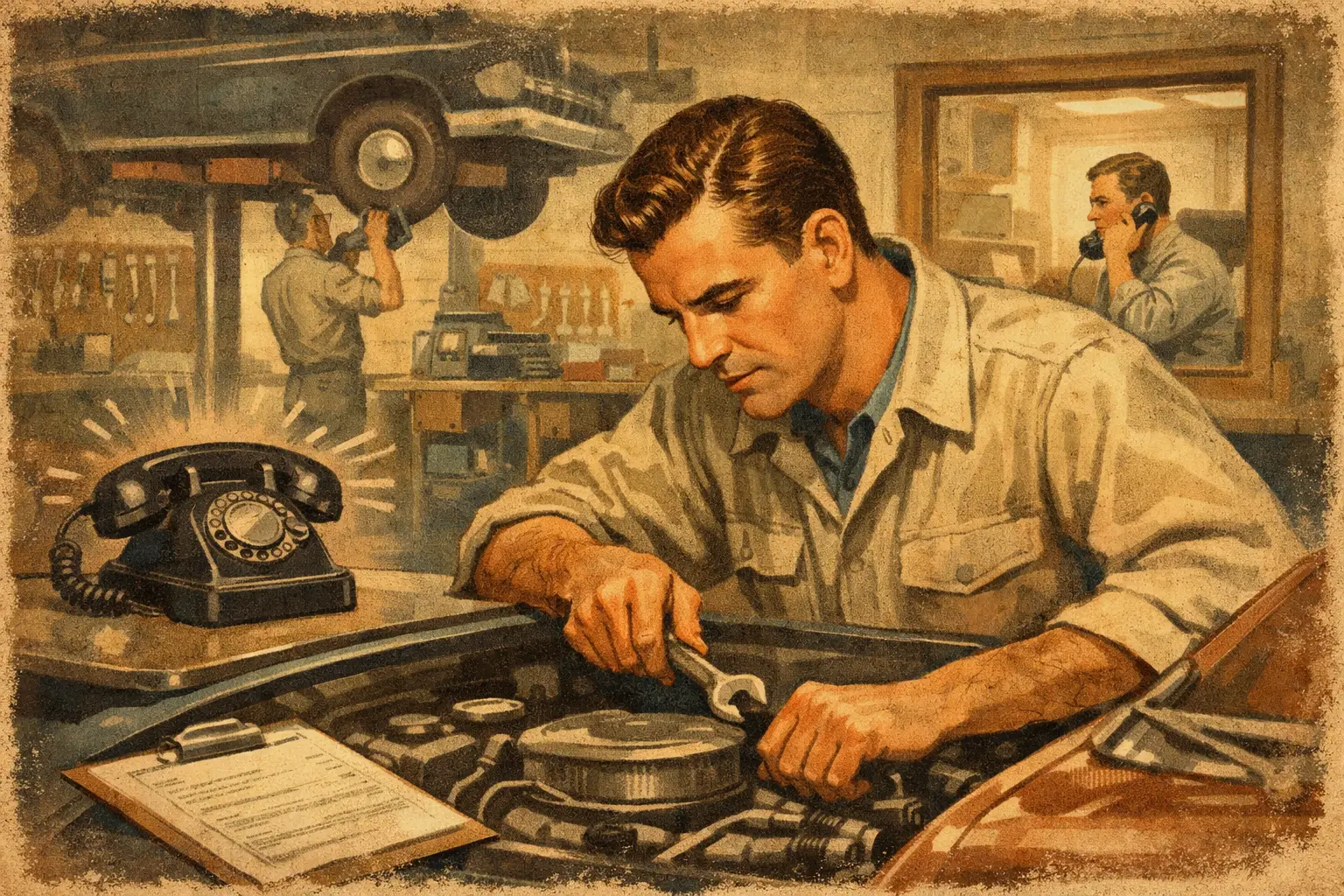
A technician is halfway through a diagnosis when the phone rings. The service writer is tied up with a customer at the counter, so somebody yells into the bay: “Can you take this one?” That one call might take two minutes. It might turn into a parts question, a warranty argument, or a caller asking whether you can look at a vehicle today. Either way, it breaks concentration at exactly the wrong time.
To reduce technician phone interruptions, the goal is not to make the shop harder to reach. It is to build a front-end process that catches calls, gets the right information, and involves a technician only when their judgment is actually needed.
Why phone interruptions cost more than two minutes
The obvious cost is time on the call. The bigger cost is the reset afterward. A tech doing electrical diagnosis, tracking a drivability issue, or working through a complicated teardown cannot always pick up exactly where they left off. They have to recheck a connector, reread a scan result, or remind themselves why they ruled out a previous possibility.
That lost focus affects more than flagged hours. It can slow down approvals, create avoidable mistakes, and drag out the day for the whole shop. When interruptions are constant, technicians start screening every question, service writers get frustrated trying to chase answers, and callers feel like nobody owns the conversation.
Not every call deserves the same response. A customer stuck on the side of the road, a vehicle already in a bay, or a parts supplier confirming a critical delivery may need immediate attention. A caller asking for a ballpark price on brakes does not need a technician pulled off a repair. The difference is call routing and clear decision rules.
Start by finding out why the shop phone reaches the bay
Most shops do not have a technician-interruption problem because the team is careless. They have it because the phones have become the fastest way to get an answer. If the person answering cannot see the schedule, does not know what services the shop does, or has no guidance on estimates, they pass the question straight to the person holding the wrench.
Listen for the repeat offenders over a typical week. They usually fall into a few familiar categories: availability questions, “how much does it cost?” calls, status requests, service questions, parts calls, and upset customers. Each category needs a different path. Treating every caller as an emergency guarantees that everything gets escalated.
A quick review of missed calls matters too. If calls pile up during the morning rush, lunch, or late afternoon pickup window, that is not a technician problem. It is a coverage problem. The fix may be better front-desk staffing, a defined overflow process, or an automotive-specific answering service that can follow your shop’s rules.
Separate information calls from judgment calls
This one distinction removes a surprising amount of noise from the bays. Information calls can be handled from a good script, a shop knowledge base, or the calendar. Judgment calls require a real person with authority or technical context.
Information calls include your hours, location, accepted payment methods, basic service availability, appointment openings, and what a customer should bring for a drop-off. They can also include careful first-pass answers such as, “We can inspect that concern, but we do not quote a repair price without seeing the vehicle.”
Judgment calls include deciding whether a vehicle is safe to drive, approving an exception to a booking rule, diagnosing a symptom over the phone, or resolving a dispute on an active repair order. Those calls should go to a defined person – usually the service writer, manager, or lead technician – not whichever technician happens to be closest to the ringing phone.
Build call rules that protect productive bay time
Good call handling is not a generic script. It is a set of shop-specific rules that tells the person answering what to gather, what they can say, what they can book, and when to hand off.
Start with appointment rules. Define which services can be booked as standard appointments, how far out the calendar should be opened, and which jobs need a service writer’s review first. Oil changes, inspections, brakes, batteries, and many maintenance services may fit a clear booking pattern. A no-start, transmission concern, intermittent electrical problem, or tow-in usually needs more intake before promising a slot.
Then define your exclusions. If you do not work on certain vehicle types, do not install customer-supplied parts, do not handle body work, or do not provide verbal estimates for complex repairs, the phone team needs to know that. Clear boundaries are better for the caller and better for your staff. They prevent a technician from getting dragged into a conversation that should have ended with a polite, accurate answer.
Finally, set escalation rules in plain language. For example, an active customer waiting on a same-day update can be routed to the service writer. A parts vendor can be directed to the appropriate contact. A caller reporting smoke, a fuel leak, or a vehicle that will not stop safely should be told not to drive it and should be routed according to your emergency process. The point is not to automate common sense. It is to keep common calls from becoming bay interruptions.
Give the front desk enough information to finish the call
A service writer cannot protect technicians from interruptions if every caller gets a vague message. The person answering needs a practical intake process: customer name, phone number, vehicle year, make, model, concern, whether the vehicle is drivable, and the preferred appointment timing.
That intake needs to sound like a conversation, not an interrogation. A caller with a check engine light does not need a lecture on diagnostic procedure. They need to know whether you can look at it, when you can see it, and what to expect next. If a price question comes up, the answer should be useful without pretending to diagnose a vehicle from across town.
For example: “Brake pricing depends on the vehicle and what we find during inspection. We can get you scheduled for an inspection and call you with options before any repair is done.” That protects the shop from bad quotes while giving the customer a next step.
Use callbacks with a real deadline
Some calls do need technical input. The mistake is putting the caller on hold while someone walks into the shop to find a technician. That creates pressure to interrupt work immediately, even when the question can wait.
Instead, capture the details and give a realistic callback expectation. “I’m going to get this to the service team. We’ll call you back by 2:00 this afternoon.” A deadline turns an interruption into a scheduled task. It also gives the service writer a chance to bundle questions for a technician between jobs rather than asking one question at a time throughout the day.
Do not promise a callback window you cannot meet. If the shop is slammed and the service writer is out until tomorrow, say so. Customers are usually more patient with a clear expectation than with a quick but incomplete answer.
Make live handoffs the exception, not the default
A live handoff is valuable when the caller needs an immediate answer from the right person. It is not valuable when it becomes a shortcut for weak intake. Before transferring anyone, the caller should be identified, the issue should be summarized, and the receiving staff member should know why the call is coming through.
That means no more blind transfers that begin with, “Someone is on the phone asking about their car.” A useful handoff sounds more like: “This is Mr. Lewis with the 2017 F-150. He approved the diagnostic work this morning and is calling for a status update before arranging a ride.” Now the service writer can respond without starting from zero.
The same applies to technicians. If a technical question truly needs a technician, let the lead or service writer decide when to bring it to them. A short written note or queued callback request often works better than an interruption in the middle of a test procedure.
Cover after-hours calls before they become next-day chaos
After-hours calls are easy to dismiss because nobody is standing at the counter. But they can create a messy opening shift when voicemail is full, callbacks are scattered, and the first hour of the day starts with catch-up instead of scheduled work.
A proper after-hours process should capture the vehicle concern, contact details, and booking preference. It should also give callers accurate expectations about when the shop will respond. For common requests, it may be able to book within your approved calendar rules. For unusual concerns, it should create a clean message for the team to review first thing.
This is where a customized AI receptionist can help, provided it is built around your actual shop. Ratchet Call maps your services, exclusions, calendar rules, pricing inquiry handling, and escalation paths so callers get a useful answer without a generic call-center routine. The system should know the difference between a routine maintenance request and a situation that needs a live staff handoff.
Measure the results where they matter
Do not judge a new phone process by whether calls sound polished. Judge it by whether the shop runs better. Track missed calls, booked appointments, callback completion, technician interruptions, and the number of calls escalated without enough information.
Review a sample of calls with your team after the first week. You may find that callers keep asking for a service you do not offer, that a booking window is too aggressive, or that one service writer wants different handoff criteria. Tune the rules. A phone process should improve as the shop learns what creates friction.
The best setup is not the one that eliminates every question for technicians. It is the one that saves their attention for questions only they can answer, while customers still reach a shop that sounds organized, informed, and ready to help.
Shops can hear it firsthand by calling the live demo line: (615) 558-5787.