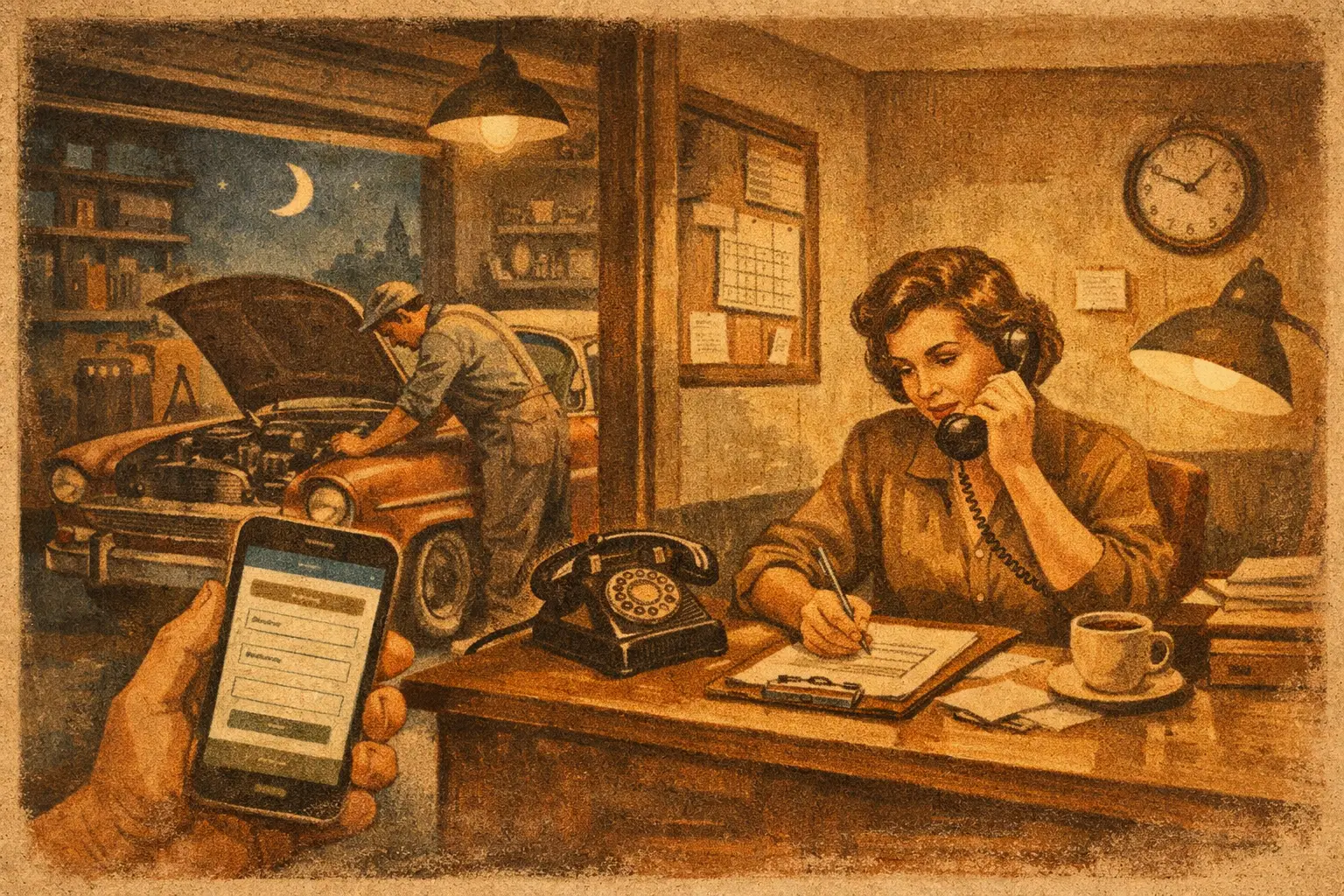
The phone rings at 7:18 p.m. A customer’s check engine light came on during the drive home, and they need a shop they can trust. If nobody answers, they usually do not leave a detailed voicemail and wait patiently. They call the next listing. After hours lead capture for garages is about stopping that leak without making an owner or service writer stay glued to a phone all night.
The goal is not to pretend every call can be fully handled after closing. The goal is to answer professionally, collect the right details, set realistic expectations, and give a real customer a clear next step. Done right, after-hours coverage protects tomorrow’s schedule while keeping the shop from promising work it cannot or should not take.
Why missed evening calls cost more than one appointment
A missed call is not always a lost brake job. Sometimes it is a customer checking whether you work on European vehicles, a parent whose teenager’s car will not start before school, or a fleet driver who needs to know whether you handle diesel diagnostics. Those questions decide where the vehicle goes next.
Evening callers are often closer to making a decision than people who submit a web form. They have a problem in front of them, they are searching now, and they want a human-sounding answer. A generic recording that says, “Leave a message after the tone,” puts all the work back on the customer. Many will not bother.
There is also a reputation issue. A shop can do great work in the bays and still feel hard to reach from the customer side. When calls go unanswered after hours, customers cannot see that the team is busy, short-staffed, or handling a difficult repair. They only know no one picked up.
What good after-hours lead capture for garages looks like
Good call capture is more than answering every ring. It needs shop-specific judgment. The caller should hear a clear greeting, get answers that match the shop’s actual services, and be guided toward an appropriate next action.
For a normal appointment request, that may mean gathering the vehicle year, make, model, concern, preferred contact details, and timing needs. If the shop has approved booking windows available, the caller can be offered a slot. If not, the lead should be tagged for a morning callback, with no vague promise that someone will “get back to you sometime.”
For an urgent-sounding call, the logic changes. A car that will not start in a driveway is different from a vehicle with smoke, a fuel smell, or an overheating condition. The after-hours system should never play service writer from a distance or diagnose a safety issue over the phone. It should direct the caller toward the appropriate immediate action, capture the details, and avoid casually telling someone to drive an unsafe vehicle in.
It also has to know your exclusions. If your shop does not perform body work, rebuild transmissions, work on certain makes, install customer-supplied parts, or handle roadside towing, the answer needs to be straightforward. A polite no is better than a booked call that becomes an argument at 8:05 the next morning.
Build the call rules before the calls start
The most common mistake is treating after-hours answering as a plug-and-play feature. It is not. A useful setup starts with how your shop actually operates when the doors are open and when they are closed.
Start with the calls you want
Look at the last few weeks of missed calls and voicemails. You will likely see repeat categories: oil changes, brake concerns, check engine lights, no-starts, tire questions, estimates, warranty questions, and requests for same-day service. Those are the situations the call flow should handle first.
Then separate leads by outcome. Some callers can be booked. Some need a callback from a service writer because the job needs more screening. Others need a respectful decline or a referral to the right kind of business. This keeps the system from treating every caller as the same kind of appointment.
Set honest booking boundaries
A calendar is not just a collection of open boxes. Shops need buffer time, technician capacity, parts lead time, inspection time, and room for work that runs long. If the after-hours line can book appointments, it must follow the same rules your front desk would use.
That means deciding what can be booked online or by phone, how far ahead appointments can be scheduled, whether early drop-off is allowed, and what happens when the first available slot is several days out. A caller with a potential no-start may need a different conversation than someone asking for an oil change next Thursday.
Same-day booking deserves special care. It can fill gaps, but it can also overload a schedule before the morning team has reviewed the work in progress. Many shops are better off offering a same-day request rather than guaranteeing a same-day appointment after closing.
Capture details a service writer can use
“Customer needs car repair” is not a lead. A useful after-hours note includes the customer’s name and number, vehicle information, the stated concern, whether the vehicle is drivable, any relevant warning lights or symptoms, and the requested timing.
It should also identify the source of the call and whether the customer was booked, needs follow-up, or was told the shop does not provide that service. When the morning gets busy, clean notes prevent your team from replaying calls or making customers repeat themselves from scratch.
The morning handoff is where the money is made
After-hours capture only works if the next shift owns the handoff. A lead that sits until lunch is still likely to go elsewhere. The shop needs a simple morning process: review new calls, confirm booked appointments, return priority leads first, and close the loop on requests that need a service writer’s judgment.
Speed matters, but accuracy matters too. If a caller said their vehicle overheated, the callback should acknowledge that specific concern. If they asked whether you work on their make, answer it directly. A customer who gave details the night before should not feel like they are starting over with a different shop.
Assign ownership as well. In a small shop, that may be the owner or lead service writer. In a larger operation, it may be whoever opens the front counter. What matters is that after-hours leads do not become everybody’s job, which usually means nobody’s job.
Where automation helps and where it should stop
An after-hours receptionist can answer routine questions, follow your service rules, capture repair concerns, book within approved windows, and escalate the calls that need a person. That removes a lot of interruption from technicians and owners while giving customers a better first response.
But it should not invent pricing, promise diagnostic results, approve a repair estimate, or tell an upset caller what they want to hear just to end the conversation. Price questions are a good example. The right move is often to explain that accurate pricing depends on vehicle details and inspection, then collect enough information for the shop to follow up. A cheap-sounding answer that cannot be honored is worse than no answer.
The same goes for frustrated customers. A caller complaining about a prior repair needs to be heard, documented, and routed according to your policy. They do not need a canned apology that makes commitments your team never approved.
Ratchet Call is built around this kind of shop-specific setup: service knowledge, exclusions, booking rules, call routing, and review of early live calls. The point is not a generic voice on the phone. It is coverage that behaves like a trained front desk working from your rules.
Measure whether the calls are worth taking
Do not judge after-hours coverage by call volume alone. Track how many calls were answered, how many became booked appointments, how many needed a callback, and how many were outside your service scope. Then look at the quality of the booked work. A calendar full of poor-fit jobs is not a win.
Review a sample of calls regularly, especially during the first few weeks. Listen for questions the system could not answer, services that need clearer wording, and booking windows that are causing friction. Shops change their hours, staffing, seasonal workload, and service mix. The call rules should change with them.
A good after-hours process gives customers a response when they are ready to act and gives your team a cleaner start when the doors open. That is how the phone becomes less of an interruption and more of a controlled source of work.
Shops can hear it firsthand by calling the live demo line: (615) 558-5787.
1 thought on “After Hours Lead Capture for Garages That Books”