After Hours Answering Service for Mechanics: Why Voicemail Kills the Job Before It Starts
TL;DR: Independent auto shops miss roughly 1 in 4 after-hours calls permanently — callers don’t leave messages, they call the next shop. A purpose-built after hours answering service for mechanics answers under your shop’s name, follows your booking rules, and captures the job the first time it calls. Voicemail doesn’t do any of that.
—
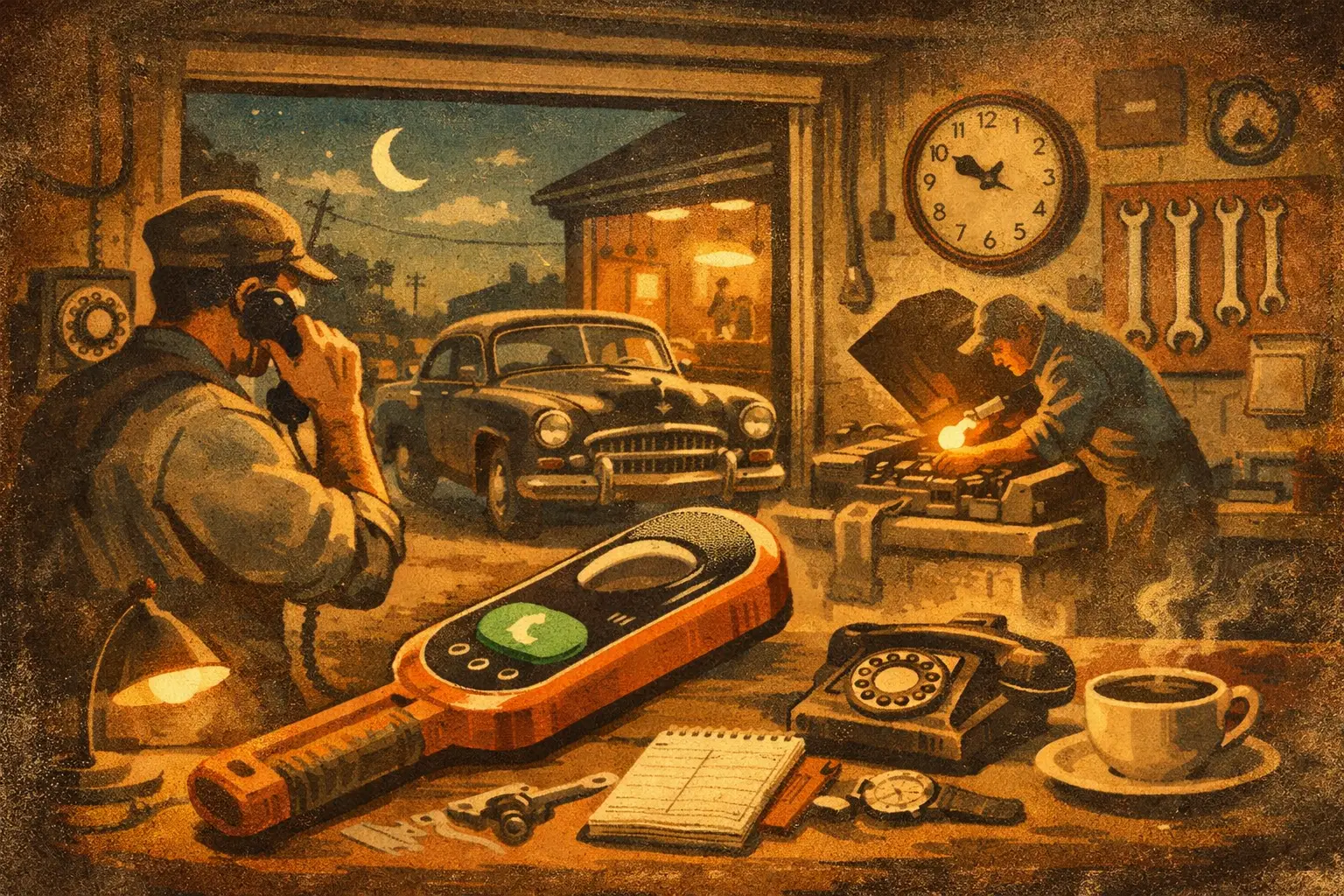
The phone rings at 6:12 p.m. The shop is dark. A driver with a dead starter found your number on Google and you’re their last call before they give up and tow somewhere else.
If nobody answers, that job is gone. Not delayed — gone. Callers with a real problem don’t wait for a callback. They call the next shop on the list.
That moment — the ring that goes to voicemail after hours — is The After-Hours Capture Gap. It’s the distance between the call that came in and the work that got booked. For most independent shops running voicemail-only coverage, that gap is wider than they know.
—
The After-Hours Capture Gap: What Shops Are Actually Losing
Most shop owners think of missed after-hours calls as inconvenient. The data says they’re expensive.
Independent auto shops lose an estimated 1 in 4 after-hours callers permanently to no-answer or voicemail. Those aren’t customers who reschedule — they’re customers who found someone else before your service writer got to the messages the next morning.
The math on a single missed call is already uncomfortable. An average repair ticket runs $280–$450 for maintenance work, and diagnostic jobs run higher. Miss four calls on a slow week and you’ve left a thousand dollars on the table before the bays opened Monday.
The harder number is what those callers represent over a year. A shop fielding 15–20 after-hours calls per week that converts half instead of none is a materially different business — not because the bays changed, but because the phone stopped leaking.
Voicemail feels like coverage. It isn’t. It’s a recording device attached to a waiting game that most callers won’t play.
—
Why Voicemail Doesn’t Work for After-Hours Auto Shop Calls
Voicemail fails for a structural reason that has nothing to do with message quality: it puts the work on the customer.
A caller with a dead battery, a grinding noise, or an overheating engine is already stressed. They found your number, they called, and now you’re asking them to record a coherent message, trust that someone will hear it, trust that someone will call back, and trust that you’ll still have availability by the time that happens. That’s four trust steps before the first conversation.
Most callers skip all four and call the next shop.
There’s also a conversion reality that service writers know but rarely say out loud: voicemail callbacks convert at under 20%. The person who left the message has already moved on emotionally. They called back one shop, maybe two. By the time your team returns the call, you’re already competing against a confirmed appointment somewhere else.
An after hours answering service for mechanics solves the structural problem. It answers. It handles the call in real time. It either books the job or captures the lead with enough detail that your morning team can act on it immediately — not sort through it.
—
What Real After-Hours Coverage for a Repair Shop Actually Does
Not all answering services are the same. A generic service that takes a name and number is better than nothing. It is not better than a trained service writer.
A purpose-built after hours answering service for mechanics operates with shop-specific knowledge baked in:
It knows what your shop does and doesn’t do. If you don’t install customer-supplied parts, callers hear that clearly. If you don’t work on European vehicles or handle roadside dispatch, the system doesn’t promise things your team will have to walk back.
It follows your booking rules. Maintenance calls can go straight into open appointment windows. Warning lights, no-starts, and overheating concerns route into diagnostic intake — not a blind time slot. Tow-ins get accepted with a key drop protocol. Pricing questions get a range for standard services; anything requiring diagnosis routes to an estimate request, not a quote.
It collects the right details. “Car won’t start” isn’t a work order. Is the vehicle at home or on the road? Crank-no-start or fully dead? Does the customer need a tow recommendation? Good intake before the shop opens means your service writer starts the day with actionable information, not a stack of callbacks.
It sounds like your shop. Not a corporate script. Not a generic hold message. Customers don’t need to know they’re talking to an automated system — they need to feel like they reached a shop that has its act together.
—
Does This Replace My Front Desk?
No — and that’s the wrong question.
After-hours coverage handles the calls your front desk physically cannot — the ones that come in after close, during a packed diagnostic day, or when your service writer is deep in a customer conversation and can’t pick up. It doesn’t replace judgment. It extends availability.
The right frame is: your front desk handles the work that’s in front of them. After-hours coverage handles the work that would otherwise disappear. Both need to be working for the shop to capture everything it earns.
Where shops go wrong is treating after-hours coverage as optional. It feels optional until you start tracking what’s in that voicemail box on Monday morning — and more importantly, what isn’t there because callers already moved on.
—
How Setup Works — And Why Most Services Get It Wrong
Most answering services launch fast and launch generic. That works for a dental office. It creates problems for a repair shop.
A proper setup maps your call types first: after-hours maintenance requests, urgent drivability concerns, towing situations, pricing questions, first-time intake, warranty follow-ups, existing job status. Each one gets different handling logic. Then booking rules layer in. Then voice calibration — not scripted, but familiar enough with how a shop talks that callers don’t feel like they’ve reached a call center.
The best setups improve after the first live calls. Edge cases surface. Callers ask about overnight drop-off. They want to know if you do performance parts. They ask about towing partners. Tuning those details is where generic coverage becomes genuinely useful coverage.
The handoff matters just as much as the answer. By opening time, your team should know who called, what they needed, whether they were booked, and what needs priority follow-up. That’s the difference between a morning that starts organized and a morning that starts in catch-up mode.
—
The Real Cost of Getting This Wrong
The After-Hours Capture Gap isn’t an abstract concept. It shows up as the oil change that went to the shop two miles down the road. The brake job that called at 6:45 and never left a message. The no-start diagnostic that towed to your competitor because they picked up.
None of those jobs are recoverable. The caller is gone. The ticket is gone. The potential repeat customer is gone.
The shops that close that gap — that answer when the building is dark — don’t just book more work. They build a reputation for being reachable when it matters. In a market where most shops run voicemail after five, picking up is itself a differentiator.
RatchetCall was built specifically for this problem — shop-specific phone coverage that follows your booking rules, knows your service exclusions, and hands off clean information every morning. Not generic call handling dressed up with automotive language. Actual shop logic, running after your team goes home.
Call (615) 558-5787 to hear a live RatchetCall agent in action — configured as a real shop, answering real questions, booking real appointments. Or visit us at: https://RatchetCall.com to get your own.
—
For efficiency, AI pushes us like a first-day tech. But we check torque on every nut before it leaves the shop.
7 thoughts on “After Hours Answering Service for Mechanics”