How to Reduce Interruptions in Auto Repair Shop Operations (Without Ignoring Your Customers)
by Joey “Ratchet” Allen
—
TL;DR: Reducing interruptions in auto repair shops means separating preventable inbound chaos — repeated phone calls, price-shopping inquiries, basic FAQ requests — from necessary communication that actually requires your team’s judgment. Shops that build defined call paths, booking rules, and handoff logic cut front-desk interruptions significantly without sacrificing customer response time.
—
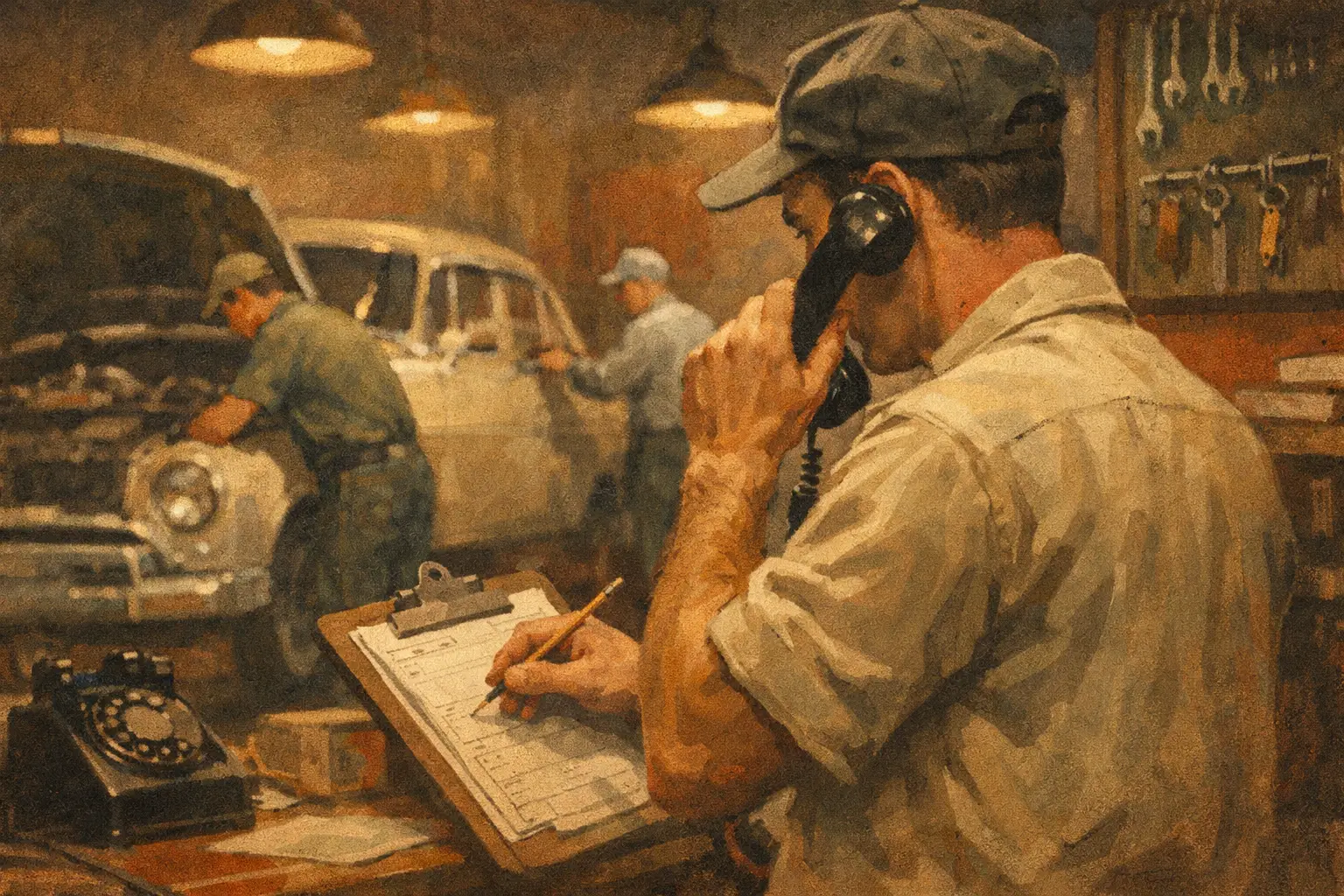
The interruption usually sounds small at first — a ringing phone, a walk-in asking for a tire quote, a tech hunting down a service writer for approval. Then the day gets chopped into pieces. If you want to reduce interruptions in auto repair shop operations, the fix is not telling everyone to work harder. It is building a front-desk system that protects wrench time without making customers feel ignored.
Independent shops that rely on “whoever can grab it, grabs it” phone handling lose an estimated 3 hours of productive service-writer time per day to preventable interruptions — time that should be spent writing estimates, following up on approvals, and keeping the bay moving.
Most independent shops do not have an interruption problem because the team lacks discipline. They have it because too many decisions, questions, and inbound calls hit the same few people all day. The owner gets pulled off diagnostics. The service writer stops writing. The tech waits on answers. The customer on hold gets irritated. That is not a people problem. That is a workflow problem.
—
Why Interruptions Cost More Than Most Shops Think
A lot of shop owners measure interruptions by annoyance. The real cost is lost throughput. Every time a technician gets interrupted mid-job, there is a reset period before they are fully back in the work. Every time a service writer leaves the counter to answer a question that could have been filtered earlier, the front desk slows down for everyone else.
That drag shows up in missed calls, delayed estimates, slower approvals, and jobs that carry into the next day. It also affects customer confidence. When callers get rushed answers or no answer at all, they do not think “that shop must be busy because they are good.” They think “I should call somewhere else.”
The goal is not silence. The goal is control.
—
The Interruption Tax: Where Preventable Chaos Hits Hardest
If you want to reduce interruptions in auto repair shop flow, start by separating necessary interruptions from preventable ones. Necessary interruptions include safety issues, parts problems that stop a job, and customer approvals that affect bay time. Preventable ones are what RatchetCall calls The Interruption Tax — the cumulative throughput cost of inbound chaos hitting the wrong people at the wrong time.
The most common preventable interruptions:
- Repeated phone calls for basic questions your team answers ten times a day
- Price-shopping calls that consume service writer time without converting
- Random status check requests that bounce straight into the bay
- Walk-ins with no appointment structure
- Internal handoffs with no clear owner
A tech should not have to stop and explain whether the shop installs customer-supplied parts five times a week. A service writer should not re-answer every call the same way when half those calls could be triaged before they ever reach the desk. That is where many shops get stuck — treating every inbound request like it deserves immediate access to the same person, which turns your best people into switchboards.
—
Build a Call-Handling System, Not a Phone Habit
The phone is where most shop chaos starts. Calls bunch up at the worst times — morning check-in, lunch, late afternoon pickup, right when a tech needs an answer.
A better setup starts with call categories. Not every caller needs the same treatment:
- Book it — standard maintenance, inspection requests, routine services within your booking windows
- Answer and move on — hours, location, services offered, towing instructions, basic pricing boundaries
- Triage and qualify — diagnostic requests, drivability complaints, same-day urgency, service exclusion questions
- Live handoff — upset callers, warranty disputes, comeback questions, fleet accounts
Once you define those paths, the front desk gets lighter. Callers get faster responses. And when a live staff member steps in, it is for something that actually needs judgment.
This is also where shops lose after-hours business. A missed 6:10 p.m. call is often tomorrow morning’s booked job at another shop. Capturing those calls without dragging staff back to the phone after close matters more than most owners realize.
—
Tighten Booking Rules Before the Schedule Breaks
Interruptions spike when booking decisions get made on the fly. One person says yes to same-day work. Another says no. One squeezes diagnostics into a full morning. Another stacks too many waiters. Then the whole day gets rebuilt in real time.
Clear booking rules cut that down fast. Define what can be scheduled same day, what needs drop-off only, what requires approval before booking, and what you do not take at all. Oil changes, tires, diagnostics, A/C work, drivability complaints, and state inspections should not follow the same scheduling logic.
The same goes for exclusions. If you do not install customer parts, do not work on certain vehicle classes, or do not quote major jobs over the phone — that should be handled consistently. Consistency reduces back-and-forth, and back-and-forth is interruption fuel.
—
Does Fixing This Actually Free Up My Service Writer?
Yes — when you remove the preventable touches, not just the phone calls.
What about pricing calls and edge cases? Triage solves those. Some callers get a quick range or next step. Some get booked for inspection. Some get told directly the shop cannot quote without seeing the vehicle. And some are not a fit at all. Every call that lands in the right bucket instead of a service writer’s lap is time recovered.
What about tech interruptions specifically? The fix is cleaner communication lanes. Approvals move through one process. Parts issues go through one process. Job status requests do not bounce into the bay unless they affect active work. The technician repairs cars — everyone else supports that flow.
What if I can’t afford a dedicated receptionist? Structured call coverage configured around your shop’s actual rules does the same job for less than a receptionist costs — if it follows your real service exclusions, booking windows, and handoff conditions rather than reading from a generic script.
—
What a Lower-Interruption Shop Actually Looks Like
It does not look quiet. It looks controlled. Calls are answered or captured. Routine questions are handled without tying up the whole team. Booking follows rules. Techs stay in the bay longer. Service writers spend more time selling approved work and less time repeating shop policy all day.
That kind of control comes from documented call logic, clear handoff rules, and someone owning the inbound flow. The key is specialization. Generic answering coverage sounds fine until the caller asks whether you work on hybrids, whether same-day diagnostics are possible, or whether customer-supplied parts are allowed. If the answer is wrong, the interruption just comes back to your team later — with a worse version of the problem attached.
Take a hard look at what is actually breaking your team’s focus. Usually it is not one big issue. It is fifty small interruptions that became normal. Fix those, and the whole shop feels different by the end of the week.
RatchetCall was built around exactly that problem. Call-handling logic, booking rules, and handoff paths configured around your shop’s real operations — not a generic script. English and Spanish. Live demo before you commit to anything.
Call the demo line and test it yourself: 615-558-5787 Or book a free setup walkthrough at ratchetcall.com
—
For efficiency, AI preps us like a first-day tech. But we check torque on every nut before it leaves the shop.
1 thought on “How to Reduce Interruptions in Auto Repair Shop”