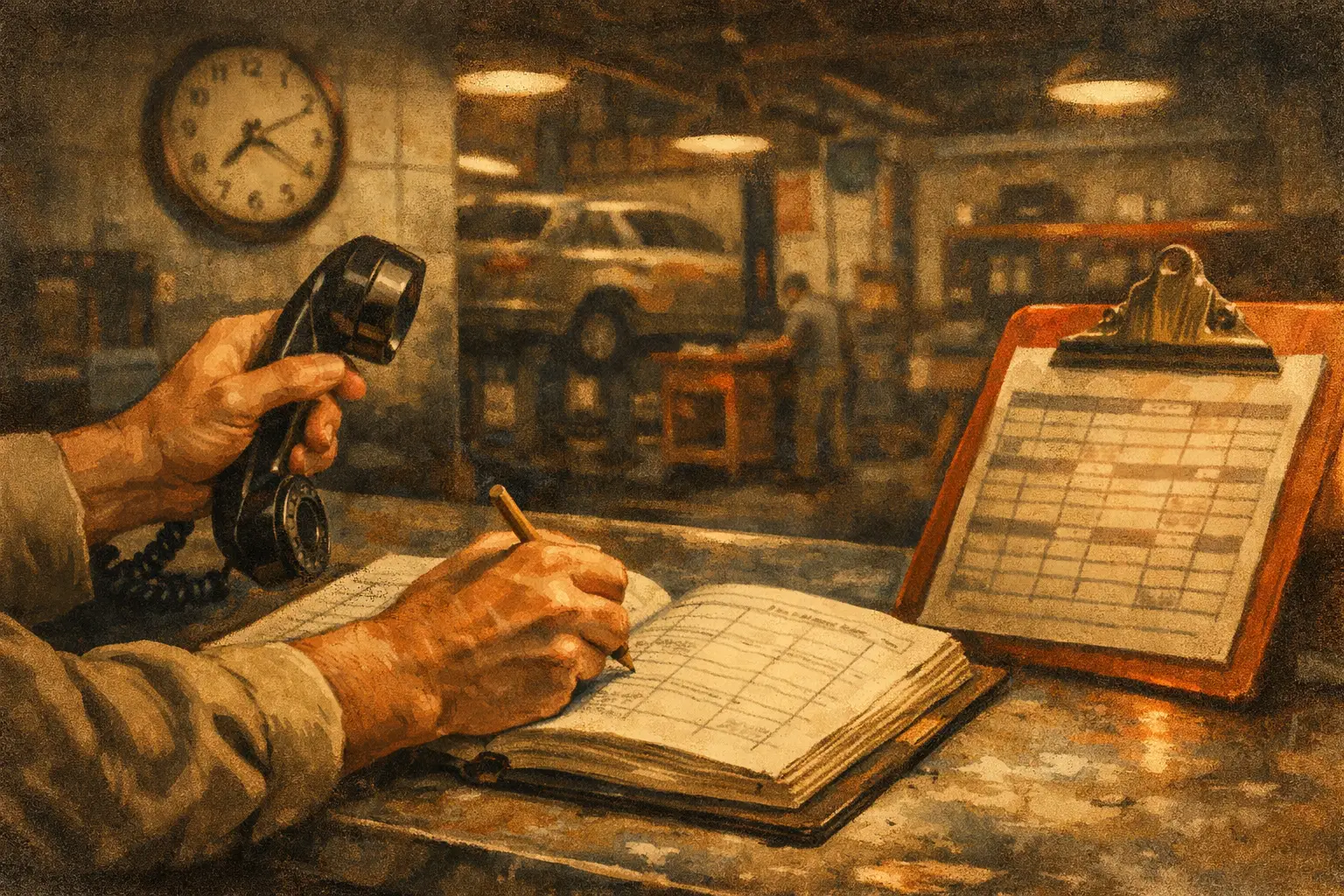
The phone rings right as a tech needs an approval, a waiting customer wants an update, and a parts vendor is standing at the counter. That is exactly why learning how to answer phones in an auto shop matters more than most owners think. The call is not just an interruption. It is a new repair order, a first impression, a pricing question that needs control, or an upset customer who can either be calmed down or lost for good.
Most shops do not have a phone problem. They have a workflow problem. Good phone handling is not about sounding polished for the sake of it. It is about getting the right information, setting the right expectation, and protecting the schedule without wasting the service writer’s day.
How to answer phones in an auto shop without wasting the front desk
If your team answers every call differently, you are leaving too much up to mood, memory, and how slammed the shop is at that exact moment. A good phone process gives your staff a repeatable way to handle common calls fast while still sounding human.
Start with the greeting. It should be short, clear, and consistent. Something as simple as, “Thanks for calling Smith Auto Repair, this is Mike, how can I help you?” works because it tells the caller they reached the right place, gives a name, and opens the conversation without sounding scripted.
What you do next depends on the call type. That is where a lot of shops get loose. Every caller does not need the same treatment. A brake noise inquiry, a tow-in, a warranty complaint, and a “how much for a check engine light” call should not all follow the same path.
The best shops sort calls quickly into a few buckets. Is this a new customer trying to book? An existing customer asking for status? A parts or vendor call? A pricing shopper? An emergency situation? Once your team knows the bucket, the response gets faster and more accurate.
The real job of the person answering the phone
In an auto shop, the person on the phone is not there to win a speech contest. Their job is to move the call toward the next correct step.
Sometimes that means booking the appointment. Sometimes it means collecting enough detail for a callback. Sometimes it means politely refusing work you do not do. That last one matters more than people admit. If your shop does not work on diesels, European cars, body damage, tires only, or customer-supplied parts, the phone has to filter that out early.
A weak phone process creates bad appointments. A strong one protects the calendar.
That is why the best service writers do three things well. They control the conversation, they ask better questions, and they do not promise what the shop has not confirmed. If your team gets those three right, phone performance improves fast.
Ask questions that lead somewhere
Too many calls drift because the person answering starts with broad questions that do not help. In most cases, you want to know the year, make, model, main concern, whether the vehicle is drivable, and whether the customer is new or existing. That gives your team enough to decide if the shop is a fit and how urgent the issue is.
For example, if a caller says, “I need a quote on brakes,” the wrong move is to blurt out a number just to keep the call moving. The better move is to narrow it down. Front or rear? Pads only or are rotors likely involved? What vehicle? Any grinding, pulsation, or warning lights? Those questions show competence and keep your staff from boxing the shop into a bad estimate.
Control pricing calls without sounding evasive
Pricing calls are where a lot of shops get burned. If you give a hard number too early, the caller hears it as a promise. If you refuse to say anything at all, you sound difficult.
The middle ground usually works best. Give a range only when it makes sense, explain what changes the price, and tie the next step to an inspection or proper diagnosis. For straightforward maintenance, you may be able to quote with confidence. For drivability concerns, electrical issues, or noises, booking diagnostic time is the right move.
That sounds like this: “We can help with that. On that vehicle, brake work can vary depending on what it needs. If you want, I can get you on the schedule for an inspection so we can give you an accurate estimate before anything is done.” Clear, firm, and realistic.
How to answer phones in an auto shop when the shop is slammed
Busy hours are when phone quality falls apart. Calls get rushed, put on hold too long, or answered by whoever happens to be closest. That is when simple call rules matter most.
First, decide who should answer first-ring calls during peak hours. If that changes throughout the day, define it. Do not assume the team will sort it out on the fly. Second, decide how long a caller should stay on hold before they are offered a callback. Third, set a rule for handoffs. If a service writer is in the middle of writing up a vehicle, another trained person should know how to capture the call without losing the lead.
A lot of missed revenue comes from half-handled calls. The customer gets put on hold, gives up, and calls the next shop. Or your team takes down a name and number but forgets the vehicle issue, so the callback starts cold. That is preventable.
A solid backup process should capture the caller’s name, phone number, vehicle, reason for calling, and whether they are looking to book, approve, or get an update. That way the callback is useful, not just polite.
Build scripts, but do not sound scripted
Shops hear the word script and think of stiff call centers. That is not the goal. A script is just a guardrail. It keeps your team from missing key steps when things get hectic.
Your greeting can be fixed. Your qualification questions can be fixed. Your wording for common situations can be fixed too, especially for after-hours calls, towing, no-starts, pricing questions, and service exclusions. The delivery should still sound natural, but the logic should be consistent.
This is especially helpful for newer front-desk staff. Experienced service writers can wing it because they know the business. Newer staff need structure until judgment catches up.
What a strong auto shop call flow looks like
A good call flow is simple. Answer fast. Identify the caller’s need. Confirm whether the shop is a fit. Book, hand off, or close the loop.
If it is a booking call, the main goal is to get enough information to place the appointment correctly. Not every job belongs in the same slot. An oil change, a check engine light, and an overheating complaint should not land on the schedule the same way.
If it is a status call, your team needs a clean process for who gives updates and when. If customers are calling because they cannot reach anyone or never get proactive updates, the phone is exposing a communication gap somewhere else in the shop.
If it is an upset caller, the first job is not fixing the car over the phone. It is slowing the situation down. Let them explain, acknowledge the frustration, and move the call to the right person with context. Nothing irritates a customer more than repeating the whole story after already being mad once.
And if the call comes in after hours, you still want it handled with shop-specific judgment. That includes knowing what to do with voicemails, web leads, lockbox questions, tow-in instructions, and next-business-day callbacks. This is where a specialized system like Ratchet Call can help a shop stay covered without forcing the owner or advisor to be on the phone all night.
Train for edge cases, not just easy calls
Any shop can answer a basic appointment request. The harder test is what happens on the weird calls.
What if a caller wants a same-day diagnosis and your schedule is full? What if they are asking about a service you do not perform? What if they want to bring their own parts? What if they are angry because another shop told them something different? What if they need a tow but have no idea what happens next?
This is where real phone training separates a working process from a nice intention. Your team needs approved answers for these situations before the calls come in. Otherwise, every tough call becomes improvisation.
There is always some judgment involved. A long-time customer with a dead battery at 4:30 p.m. may deserve a different response than a first-time caller with a vague complaint and no appointment. That does not mean your process is inconsistent. It means your process leaves room for good judgment inside clear boundaries.
The goal is not perfect uniformity. The goal is dependable handling.
When your phones are answered well, the whole shop runs better. The calendar gets cleaner. Bad-fit jobs get filtered out sooner. Customers feel taken care of before they ever walk in. And your service writers spend less time cleaning up confused expectations.
If your current setup depends on whoever happens to grab the phone, that is your sign to tighten the process now, before the next missed call turns into lost work.
3 thoughts on “How to Answer Phones in an Auto Shop”