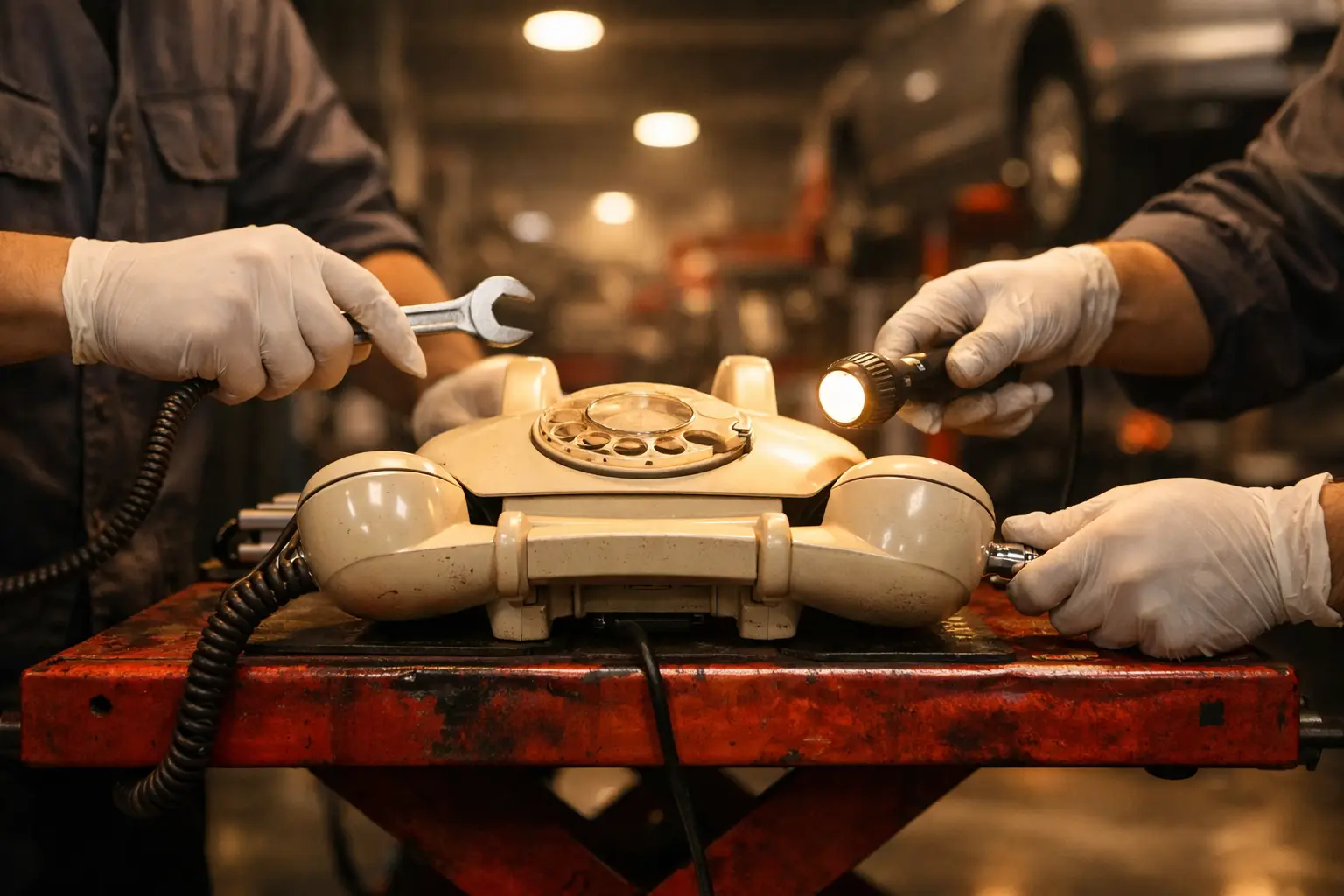
Auto Repair Shop Customer Call Management: What’s Actually Costing You Jobs
TL;DR: Independent auto shops miss roughly 1 in 3 inbound calls during peak bay hours, and voicemail converts less than 20% of those into booked appointments. The problem isn’t call volume — it’s a mismatch between how calls get handled and how your shop actually runs. Fixing that gap is where the revenue comes back.
—
The phone rings right when a tech needs an approval, a customer’s standing at the counter, and a parts vendor is on hold. That moment — when the call goes unanswered — is where auto repair shop customer call management stops being a concept and starts costing real money.
For most independent shops, that scenario isn’t occasional. It’s Tuesday.
What makes it worse is the math: a single unanswered brake job is $300–$400 gone. An unanswered transmission call is closer to $1,200. And voicemail doesn’t save it — fewer than 1 in 5 voicemails ever convert to a booked appointment. The caller found someone else before the callback happened.
—
The Front-Desk Friction Gap
Most shops don’t have a phone volume problem. They have a Front-Desk Friction Gap — the distance between how calls actually get handled and how the shop actually operates.
A single service writer handling the counter, the phones, and tech support simultaneously can’t give every call consistent attention. So calls get answered differently at 8:30 than they do at noon. They go unanswered during the lunch rush and entirely after 5 PM. The caller on the other end feels that inconsistency immediately — and a shop that sounds disorganized on the phone loses the job before the car ever arrives.
This isn’t a staffing failure. It’s a structural one. The phone process was never built to match the shop’s actual operating conditions.
—
Where the Calls Are Going
Miss windows are predictable. Once you know them, you can plug them.
The morning rush — First 90 minutes of the day, when write-ups are happening, the lot is filling, and every tech has a question. Phones get deprioritized.
The lunch window — The 60-minute block that gets the least coverage. [LINK: lunch-hour-bookings] Documented as one of the highest-loss windows in the shop day.
Late afternoon — Customers calling for status updates while staff is trying to close tickets. Phones get buried.
After hours — This one surprises most owners. People call when they get off work. When the check engine light comes on at 9 PM. When they finally sit down and remember to schedule the oil change they’ve been putting off for three weeks. [LINK: after-hours-capture] That traffic doesn’t disappear — it just goes unserviced.
—
What Good Call Management Actually Looks Like
Good auto repair shop customer call management isn’t about answering every call. It’s about answering every call correctly — with the judgment your front desk already applies, applied consistently, without exception.
That means:
Booking the right jobs. Not every inbound call should result in a same-day appointment. Your call handling needs to reflect actual capacity — which services can be booked immediately, which need intake questions first, and which should be scheduled into specific windows to avoid stacking bad appointments.
Filtering what doesn’t fit. If your shop doesn’t do diesel, glass, body work, or certain European makes, callers need a clean, professional answer — not a vague “we’ll have to check.” A definitive no saves everyone time and keeps your team from chasing work that was never going to happen.
Routing the hard calls correctly. Upset customers, warranty disputes, and safety concerns need a live handoff — not a message. The system handling your phones has to know the difference between a status-check complaint and a situation that needs management in the next five minutes.
Covering every hour. [LINK: after-hours-capture] An after-hours call that goes to voicemail is a lead that disappears. After-hours call handling should capture, log, and queue every inbound contact so the first thing on your desk Monday morning is a list of people ready to book — not a blinking voicemail light you may or may not get to.
—
Why Generic Answering Services Don’t Work
A standard answering service takes a message. That’s all it does.
It doesn’t know the difference between someone asking for a state inspection and someone describing a parasitic draw that’s been happening for three weeks. It can’t apply your booking rules, respect your service exclusions, or recognize which call type needs a live transfer. It answers, it records, and it leaves the actual work for your team to sort out later.
That’s not call management. That’s call collection. And it still leaves you with the same back-end problem — unfiltered messages that someone has to chase.
The other option shops reach for is hiring another person at the front. That adds $3,000–$4,000 per month in overhead. And they still miss calls at lunch, still aren’t there after hours, and still have bad days that cost you a job.
—
Does a Purpose-Built System Replace My Front Desk?
No — and that’s not what the good ones are designed to do.
The goal is to take the call types your front desk handles on autopilot — routine bookings, FAQ answers, hours and directions, pricing ballparks — and handle those without pulling your team away from higher-value work. Your service writer stays focused on the customer in front of them, the tech asking about a part, the write-up that needs to go out.
What gets routed to your desk is what actually needs a human: escalations, decisions that require shop context, and edge cases the system flags. Everything else lands booked, confirmed, and logged.
A shop-specific setup should know your services, your exclusions, your booking windows, and your escalation triggers before the first live call. It should also be tunable after launch — no shop gets every rule perfect on day one, and the system needs to adapt to real call outcomes.
—
The Standard to Hold Your Phone Process To
If your phone process was built by default — whoever picked up, handled it however they felt, with voicemail as the backstop — it’s costing you work you can’t see. The jobs that never made it to a ticket don’t show up in your numbers. They just don’t come in.
The shops that fix this notice the same changes: fewer missed opportunities, better appointment quality, less front-desk chaos, and a phone experience that sounds like the operation behind it actually knows what it’s doing.
That’s the standard. Call handling that reflects how your shop runs, not how a generic system assumes shops work.
Hear it in action at (615) 558-5787 — a live RatchetCall agent, running right now, 24/7.
Or see what’s included at ratchetcall.com.
—
“For efficiency, AI preps us like a first-day tech. But we check torque on every nut before it leaves the shop.” — Joey “Ratchet” Allen, RatchetCall
—
Meta description: Independent auto shops miss 1 in 3 calls during peak hours and voicemail converts less than 20%. Here’s what good auto repair shop customer call management actually looks like — and what it costs when it’s broken.
1 thought on “Auto Repair Shop Customer Call Management”