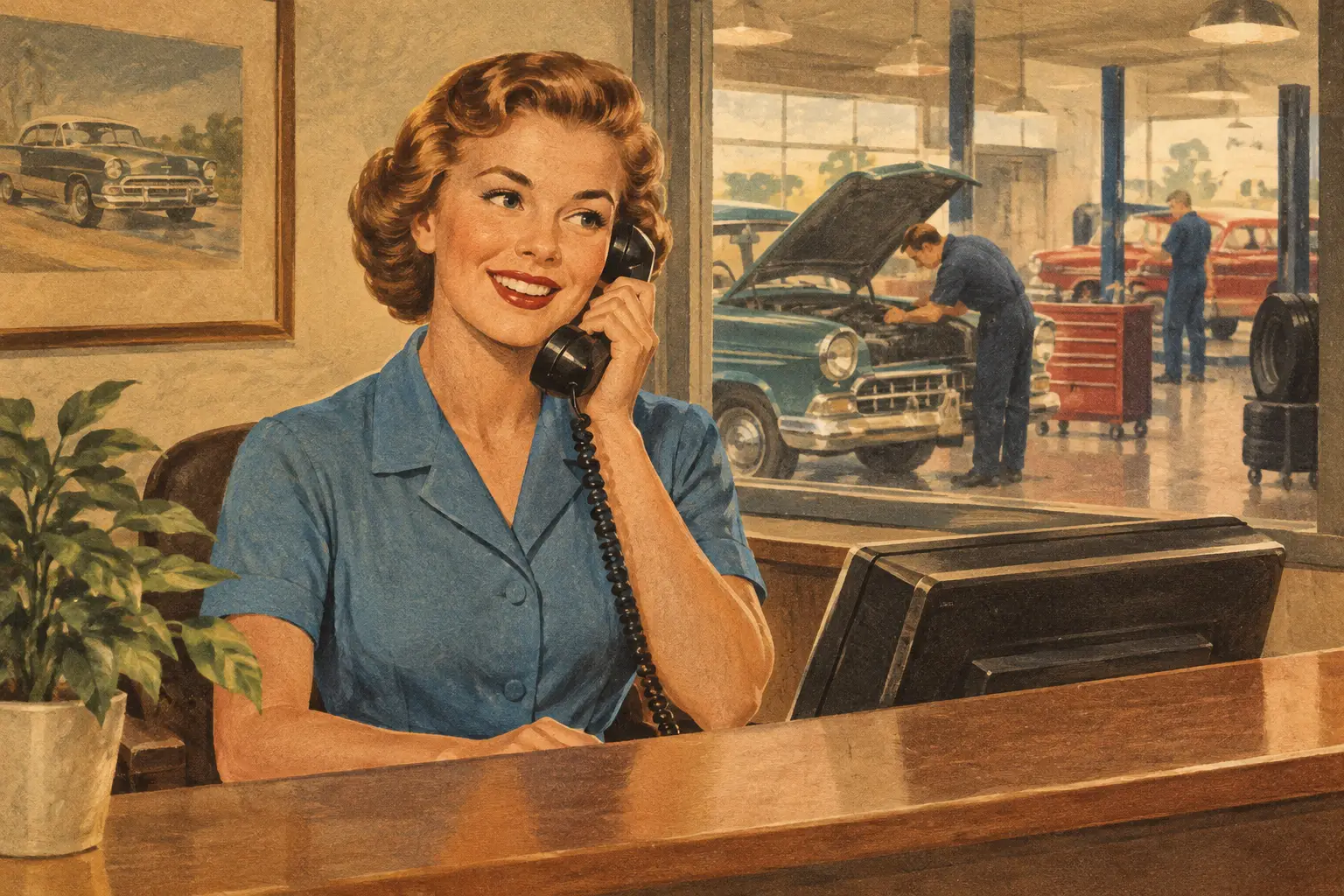
The phone rings while your service writer is explaining a brake estimate, a tech needs approval on a parts order, and a walk-in customer wants to know whether their vehicle will be ready by five. That is where automotive receptionist trends stop being a tech conversation and become a shop-floor issue. The shops pulling ahead are not just answering more calls. They are handling each call with clear rules, faster follow-up, and less disruption to the people trying to get vehicles repaired.
For independent repair shops, the front desk has always been a pressure point. Customers expect someone to pick up, know the basics, and give them a useful next step. But a busy service writer cannot be on the phone, at the counter, in the shop, and managing the schedule at the same time. The trend is not replacing good people. It is building phone coverage around the way a real shop operates.
Automotive Receptionist Trends Are Moving Beyond Voicemail
Voicemail used to be the fallback plan: let the caller leave a message, return it when the rush slows down, and hope they have not called three other shops first. That approach is getting weaker by the year.
A caller with a no-start, a flashing check-engine light, or a brake concern is usually looking for action now. They may not need a diagnosis over the phone, but they do need to know whether the shop works on their vehicle, whether there is an opening, and what to do next. If all they get is a mailbox, the shop has handed that decision to the caller.
The stronger model is live call capture with a real purpose. The caller is greeted professionally, their concern is collected, and the appointment is booked when it fits the shop’s rules. If the request needs a human decision, the call is handed off or routed for follow-up with the right details already gathered.
That distinction matters. A generic answering service may take a name and number. A front-desk system built for repair shops understands that “I need an oil change” and “my 2018 F-150 is shaking under braking” are different calls. One might fit a standard maintenance slot. The other may require a diagnostic appointment, vehicle details, and a conversation about timing.
Booking Rules Are Becoming the Real Difference
More shops are learning that answering the phone is only half the job. Bad booking can create almost as much trouble as missed calls.
A receptionist, human or AI-supported, needs to know the shop’s actual operating rules. Does the shop handle diesel work? Do you service European vehicles? Are alignments available only on certain days? Can a same-day oil service be accepted after noon? Does a tow-in need manager review before it is placed on the board?
Without those details, a caller can be booked into a slot that the shop cannot honor. Then the service writer has to call back, move the appointment, and explain why the first answer was wrong. That does not feel efficient to the customer, and it creates more work for the staff.
The better trend is configurable scheduling logic. Instead of telling every caller, “Sure, come on in,” the system follows the way the shop already runs. It can offer available windows, separate maintenance from diagnostic work, avoid excluded services, and escalate edge cases before they become promises the shop cannot keep.
There is a trade-off here. Tight booking rules can reduce flexibility if they are set too aggressively. Leave too much open, and the schedule becomes a mess. The goal is not to automate every decision. The goal is to automate the routine calls while preserving human judgment for the calls that deserve it.
The Best Front Desk Knows When Not to Answer
That may sound backward, but it is one of the most useful automotive receptionist trends. A good front desk does not guess at a transmission replacement quote, promise a turnaround time on an unknown electrical issue, or tell a caller their warranty will cover something without verification.
Instead, it sets expectations. It can explain that pricing depends on inspection, collect the vehicle year, make, model, symptoms, and contact information, then route the request to the appropriate person. The caller gets a direct answer about what happens next, and the shop avoids making a bad promise.
That is especially important with pricing questions. Customers often call asking, “How much for brakes?” A trained front desk should not dodge them, but it should not throw out a number detached from rotor condition, vehicle configuration, parts quality, or the actual complaint. It can explain the inspection process, offer a relevant appointment, and flag the request for the service writer.
After-Hours Calls Are Becoming a Competitive Advantage
Most repair shops do not need a full front desk staffed around the clock. They do need a plan for the calls that come in after closing, during lunch, or while everyone is tied up.
After-hours callers are often planning tomorrow. They are searching for a shop after work, dealing with a vehicle that just acted up, or trying to arrange a drop-off before their morning gets away from them. If they can leave a clear request, get basic guidance, and reserve a suitable opening, the shop starts the next day with work already on the calendar.
This does not mean every after-hours request should be booked automatically. A vehicle that cannot be driven, a customer asking about a specialized repair, or a request that falls outside normal service categories may need review. But capturing the call correctly gives the team something useful to act on rather than a vague voicemail recorded in a noisy parking lot.
For shops in competitive markets, response speed is increasingly part of customer service. The customer may never see your clean bays, strong diagnostic process, or honest estimate if nobody handles the first call.
The Human Handoff Is Not Going Away
Some shop owners hear “AI receptionist” and picture a caller trapped in a frustrating phone tree. That concern is fair. Bad automation makes customers repeat themselves, gives canned answers, and blocks them from reaching a person when the situation is complicated.
The direction worth paying attention to is different: use automation for coverage and consistency, then build a clean path to staff when the call requires it. A customer with an active repair, an upset concern, an authorization question, or a complicated fleet issue should not be forced through a script.
The handoff also needs context. When a service writer picks up, they should know who is calling, what vehicle they have, and why they called. Starting from scratch is where callers feel like they are being bounced around.
A well-configured system can also protect the staff from unnecessary interruptions. Not every call needs to pull a service writer away from an estimate. Appointment requests, business hours, drop-off instructions, basic service availability, and routine status-routing can be handled without stopping the person at the counter.
That leaves staff available for the conversations where experience matters most: explaining inspection findings, working through an upset customer situation, reviewing options, and selling the work that genuinely needs to be done.
Voice and Shop Knowledge Matter More Than Novelty
Customers can tell when the person answering has no feel for an automotive shop. They do not expect a phone agent to diagnose every noise. They do expect plain answers and a little common sense.
The strongest systems are being trained on each shop’s own services, exclusions, hours, drop-off process, and appointment preferences. They use the shop’s vocabulary. They know the difference between a customer asking for an oil change and one reporting an overheating condition. They know when to say, “We will need to inspect that,” instead of pretending a repair can be priced from one sentence.
This is why setup matters. Before calls go live, a shop should map its common call scenarios: new customer appointments, repeat customers, tire requests, diagnostic concerns, after-hours messages, estimate follow-ups, fleet calls, and emergencies. Then it should decide where the system can act, where it should collect details, and where it must hand off.
Ratchet Call approaches the job like front-desk setup, not a generic answering script. The call logic, shop knowledge, booking windows, and staff handoffs should match the way the shop actually works. Early call review matters too. The first live calls reveal the questions customers really ask and the rules that need tuning.
What Shop Owners Should Watch Next
The next phase is not about putting more technology between a shop and its customers. It is about removing the friction that makes phone calls fall through the cracks.
Watch your missed-call volume, but also watch what happens after the call is answered. Are appointments being placed in the right slots? Are callers getting accurate expectations? Are service writers spending less time repeating basic information? Are after-hours leads showing up on the schedule with enough detail to be useful?
If the answer is no, the issue is probably not that the shop needs a fancier phone system. It needs clearer operating rules and front-desk coverage built around those rules. You wrench. Your phone coverage should know what to do when the next customer calls.
Shops can hear it firsthand by calling the live demo line: (615) 558-5787.