The phone rings while your service writer is explaining a brake estimate, a tech has a question at the rack, and a customer is standing at the counter waiting to pay. That is where the human receptionist versus AI question gets real. It is not about chasing a trend. It is about deciding who should handle the next call without slowing down the work already in the building.
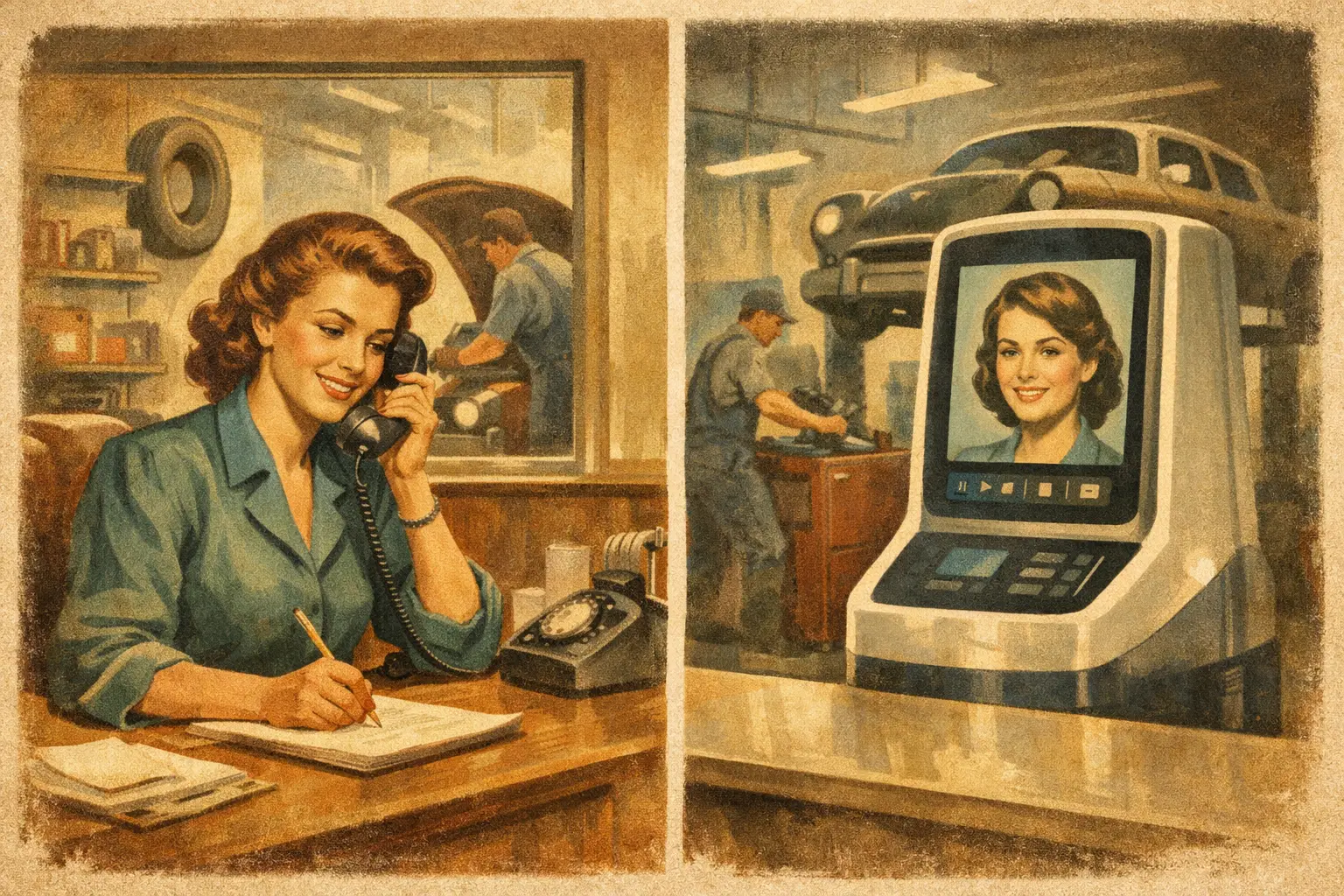
For an independent repair shop, a missed call can be a lost appointment, a frustrated existing customer, or a tow job that goes elsewhere. A live person can bring judgment and reassurance. An AI receptionist can provide coverage when your team is flat-out busy, at lunch, or already home for the night. The right answer is usually not an all-or-nothing choice.
Human Receptionist Versus AI: The Shop Reality
A good human receptionist or service writer understands people in ways software does not. They can hear that a caller is scared about a warning light, recognize a regular customer by name, and make a judgment call when a situation does not fit the usual process. They can calm down an upset customer, coordinate with the technician who inspected the vehicle, and explain why a firm price is not possible until the car is diagnosed.
That judgment matters. If someone says their truck is overheating on the side of the road, you do not want a canned response that treats it like a routine oil-change request. If a fleet account calls with a vehicle-down issue, your team may want that call pushed to a specific person immediately. If a customer disputes a previous repair, a manager may need to take over before the conversation gets worse.
But most inbound calls do not require a senior service writer to stop what they are doing. They are predictable: hours, location, whether you work on a vehicle make, whether an alignment is available, when the next oil-change opening is, or whether the shop can inspect a check-engine light. These calls need a fast, accurate answer and a clear path to booking.
That is the gap an automotive-specific AI receptionist is built to cover. It should not pretend to be a master technician. Its job is to answer, qualify the request, follow your shop rules, book the right appointment when appropriate, and get a human involved when the call needs one.
What a Human Receptionist Does Better
Human front-desk staff bring context built from experience. They know that Mrs. Taylor’s Honda has been in twice this month. They know a promised part is late, a technician is out sick, or the alignment rack is tied up until midafternoon. They can also read the room when a caller is vague, angry, embarrassed about money, or trying to explain a noise with five different sound effects.
They are also better equipped for negotiation and exception handling. A customer asking for an estimate on a transmission replacement, arguing about a warranty, or requesting a favor outside normal policy needs a person with authority or quick access to one. The same goes for complicated repair histories, insurance questions, and callbacks where the caller expects someone who knows the vehicle.
The catch is that a human receptionist is not automatically available just because the phone is ringing. Small shops often put phone duty on the owner or service writer. That works until the morning rush hits. Calls go to voicemail, get answered in a hurry, or interrupt a conversation that should have the service writer’s full attention.
Hiring a dedicated receptionist can solve part of that problem, but it adds payroll, training, coverage gaps, and turnover risk. One person also cannot answer two calls at once, work every lunch hour, and cover evenings without help. A strong front-desk hire is valuable, but it does not eliminate the need for a dependable overflow plan.
Where AI Makes the Most Sense
AI is strongest when the call flow is clear and the rules are defined. Think of it as a front-desk teammate that stays on task. It can answer every call, confirm the shop’s hours, gather the vehicle details, explain basic service availability, and offer appointment times that fit your actual calendar rules.
It can also protect the team from interruptions. Instead of a technician dropping tools to answer whether you install customer-supplied parts, the caller gets a direct answer based on your policy. Instead of a service writer leaving the counter to schedule a state inspection, the appointment can be captured while the writer finishes with the customer in front of them.
After-hours coverage is another clear use case. Plenty of drivers call after work because that is when they have time to deal with their car. A voicemail box records the problem. A properly configured AI receptionist asks useful questions, captures the contact information, and can often schedule the next available opening. The shop starts the next morning with a real lead, not a stack of messages that may or may not get returned.
The phrase “properly configured” matters. Generic phone automation is a bad fit for repair shops because automotive calls are full of shop-specific details. Do you service European vehicles? Do you perform diesel work? Do you take walk-in tire repairs? Do you allow customer-supplied parts? Can a no-start be booked as a regular appointment, or does it need to be towed in? The answers should come from your operation, not a generic script.
The Risk of Treating AI Like a Replacement
AI can handle repetitive calls well, but it should not be given authority it has not earned. If the system guesses at repair pricing, promises a same-day turnaround without checking capacity, or books work your shop does not perform, it creates more cleanup for the front desk. That defeats the point.
A good setup has boundaries. It knows when to give a range versus when to say diagnosis is required. It knows the services you exclude. It knows when to transfer a live call, take a message for a callback, or tell the caller that a manager will follow up. It should never bluff through an answer just to keep talking.
There is a customer-experience concern, too. Some callers will always prefer a person, especially when they are dealing with an expensive repair or a stressful breakdown. Do not dismiss that preference. Give them a path to a human when the situation calls for it, and make sure the AI’s tone is clear, helpful, and professional rather than overly cheerful or robotic.
Build a Hybrid Front Desk That Actually Works
The best setup for many shops is human judgment backed by AI coverage. Your people focus on estimates, repairs in progress, customer conversations, and exceptions. AI handles the first response for routine calls and keeps the calendar from sitting empty because nobody could pick up.
Start by mapping the calls your shop gets in a normal week. Separate simple booking and FAQ calls from calls that need a service writer, manager, or technician. Then define the rules that prevent bad appointments: vehicle types you do not service, lead times for certain jobs, same-day limits, diagnostic requirements, and situations that require a tow or live handoff.
Next, review real call behavior after launch. Are callers asking about a service the system does not recognize? Are the appointment windows realistic? Is the handoff happening early enough for upset callers and complex jobs? The first version does not need to be perfect, but it does need to be tuned from real shop traffic.
Ratchet Call takes this approach by mapping call scenarios, service knowledge, booking rules, and handoffs before calls go live. The goal is not to make your shop sound like a call center. It is to keep callers moving toward the right next step while your team keeps working.
Choose Based on the Work, Not the Hype
If your shop has a capable receptionist who answers every call quickly and has room to handle the volume, AI may be most useful as after-hours and overflow coverage. If your service writers spend half the day bouncing between the phone and the counter, automation may relieve a much bigger bottleneck. If calls are complex and heavily dependent on vehicle history, keep humans close to the handoff.
The real measure is simple: how many good calls are being answered, booked correctly, and followed through without pulling your best people away from the work that needs them? Build around that answer. Let people handle the judgment calls. Let AI handle the repeatable ones. Your customers get a response, your calendar stays active, and your team gets more time to run the shop.
Shops can hear it firsthand by calling the live demo line: (615) 558-5787.