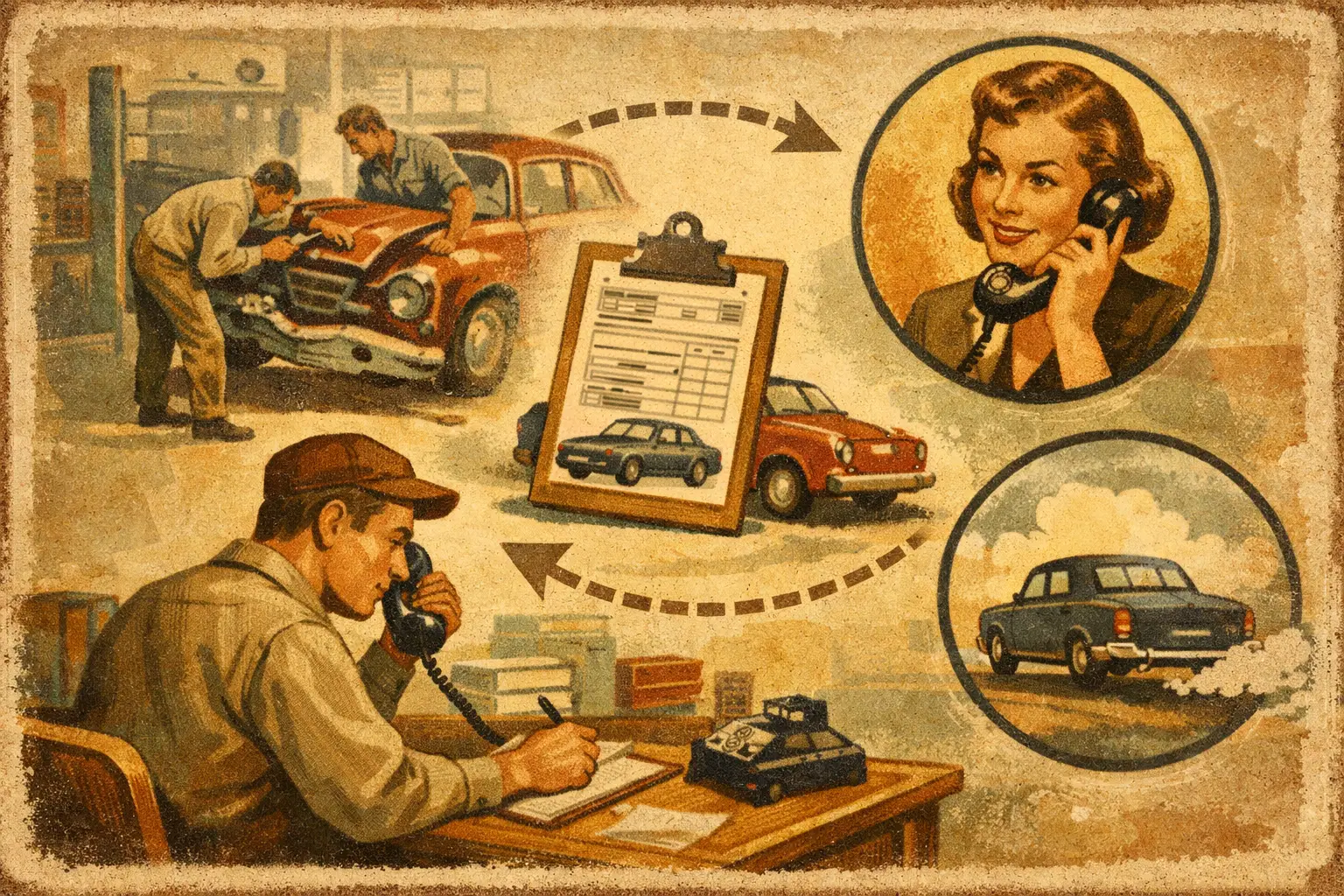
A caller asks, “Can you give me a ballpark on brakes?” Your service writer is checking in a tow-in, the advisor is on the phone with a parts supplier, and two techs need answers. The call goes to voicemail. To automate repair estimate callback requests is not about having a machine quote a repair it cannot see. It is about making sure that caller is captured, qualified, and routed into a callback process your team can actually keep.
Estimate calls are not all the same. A customer with a check-engine light needs diagnostic context. A caller requesting a price on front pads may have worn rotors, a sticking caliper, or an electronic parking brake procedure that changes the job. The right system protects your shop from bad quotes while making sure a real customer does not move on to the next search result.
Why Estimate Calls Need Their Own Workflow
A missed oil-change call is frustrating. A missed estimate request can be more expensive because the caller is actively shopping and usually needs a decision fast. If nobody answers, they may assume the shop is too busy, too disorganized, or simply not interested.
The usual fallback – “Leave a message and we’ll call you back” – creates a pile of uneven notes. One caller leaves only a first name. Another rattles off a VIN, mileage, symptoms, and three requested repairs. A third says, “I need a quote,” but does not say whether they need a diagnostic appointment, a written estimate from an existing inspection, or a status update on a vehicle already in your lot.
Automation gives every one of those calls a consistent front-door process. It gathers the right details, sets the right expectation, and places the request where a service writer can work it in. That is different from promising a price on the spot.
What a Good Callback Request Should Capture
The goal is not to turn the caller into a service writer. Keep the conversation short enough that people finish it, but detailed enough that your team can return the call prepared.
For most estimate requests, the intake should collect the caller’s name, best callback number, vehicle year/make/model, the work they believe they need, and whether the vehicle is currently driveable. Mileage can help, particularly for maintenance requests, but it is not always necessary on the first call.
The system should also distinguish between a known repair and a symptom. “What do you charge for a starter?” is not the same as “My car clicks and will not start.” The first may support a rough range with clear conditions. The second needs diagnosis before anyone should talk numbers. If the caller has already received an inspection or estimate from your shop, the request should be tagged as a follow-up rather than treated as a new lead.
A useful intake also asks about timing. Is the customer trying to get in today? Are they arranging a tow? Do they need approval from a spouse, fleet manager, or warranty company? Those details tell your staff which callbacks need attention first.
Set expectations before the call ends
The caller needs an honest next step. If your team can return estimate calls within a defined window during business hours, say that. If brake pricing depends on a full inspection, say that too. Clear language prevents the callback from starting with, “I was told you would give me an exact price.”
For example: “We can have a service advisor call you back with the next step. Final repair pricing depends on the vehicle condition and parts needed, but we’ll get the details to the right person.” That keeps the conversation professional without boxing the shop into a number based on guesswork.
Build Rules Around What Your Shop Will and Will Not Quote
Every shop has services it can price quickly and services that demand an inspection. Your callback workflow needs to reflect that reality, not a generic customer-service script.
You may be comfortable giving starting prices for an oil service, alignment check, tire rotation, or a standard state-required service. You may choose not to quote diagnostics, engine work, electrical faults, transmissions, A/C leaks, intermittent noises, or “my mechanic said I need everything” over the phone. That is not dodging the customer. It is protecting accuracy and preserving trust.
Write those rules down before you automate anything. Be specific about exclusions. If you do not install customer-supplied parts, the caller should learn that before a service writer spends ten minutes researching a quote. If you do not work on certain makes, diesel platforms, hybrids, heavy-duty trucks, commercial vehicles, or collision repairs, route those calls appropriately from the start.
You also need a rule for labor-only questions. A caller may want to know, “What is your hourly rate?” Your team may prefer to discuss diagnostic time and repair estimates in terms of the actual concern rather than give a number with no useful context. Either approach can work, as long as the automated response follows your shop policy every time.
Route the Request Based on Urgency
Not every callback belongs in the same queue. A vehicle blocking a driveway, a customer stranded after a breakdown, and a tire concern with visible damage should not wait behind someone pricing a future maintenance service.
A practical workflow separates urgent safety or no-start situations from routine estimate requests. During open hours, urgent calls may need a live staff handoff when someone is available. After hours, the system can capture tow location, vehicle details, and a clear callback number while avoiding promises your team cannot meet overnight.
For routine requests, send a structured note to the person or place your shop already uses to manage follow-up. The note should be readable at a glance: customer name, phone number, vehicle, requested service or symptom, urgency, and any key qualifier such as “has competitor estimate” or “needs appointment this week.”
The best routing method depends on your staffing. A one-advisor shop may need a simple callback queue reviewed at set times. A larger operation may assign brake and maintenance requests to one advisor, diagnostic concerns to another, and existing-customer follow-ups to the advisor who wrote the original estimate. Automation should fit the handoff habits that already work, then tighten the gaps.
Do Not Automate a Bad Promise
The biggest mistake is configuring an AI receptionist to sound confident about things it cannot verify. Exact pricing without a VIN, trim level, parts availability, inspection results, or shop labor requirements is how a helpful phone interaction becomes a conflict at the counter.
Avoid blanket promises about same-day availability, turnaround time, loaners, shuttle service, warranty coverage, or diagnostic outcomes. These are all shop-specific and can change by the hour. The same applies to insurance, extended warranty, and fleet billing calls. Capture the relevant details and route them to a person who can confirm the terms.
Good automation is precise about what happens next. It does not pretend the phone is a repair order. It makes the repair order easier to start.
Measure Whether Callbacks Turn Into Cars
Once requests are being captured consistently, review the results weekly. The number of callbacks alone does not tell you much. You want to know how quickly your team responded, how many callers booked, how many showed up, and which types of estimate calls became profitable work.
Listen to a sample of calls, especially in the first few weeks. Look for missing questions, confusing phrasing, callers who repeatedly ask for a live person, and services that are being misclassified. You may find that callers asking about “brakes” are frequently actually dealing with a grinding noise, or that your team wants VIN collection added for certain makes before returning a parts-based estimate.
This tuning is where a shop-specific system earns its keep. Ratchet Call maps scenarios, service exclusions, booking windows, and handoff rules around how your front desk actually operates. The point is not to make every caller hear the same words. The point is to give each caller the right next move without pulling a technician off a lift.
Give Your Team a Callback Standard They Can Hit
Automation cannot force a busy shop to return calls. It can make the work visible, organized, and far less likely to slip through the cracks. Decide who owns the queue, when they review it, and what happens when the primary person is tied up.
A realistic standard beats an ambitious one nobody can maintain. If your service writer can reliably return routine requests within two business hours, configure that expectation. If late-afternoon calls are handled first thing the next morning, say so. Customers can accept a wait when they know what is happening. They do not accept silence.
Treat estimate callback automation like a clean work order at the front counter: enough information to get moving, no made-up diagnosis, and no loose ends for the next person to figure out. Shops can hear it firsthand by calling the live demo line: (615) 558-5787.