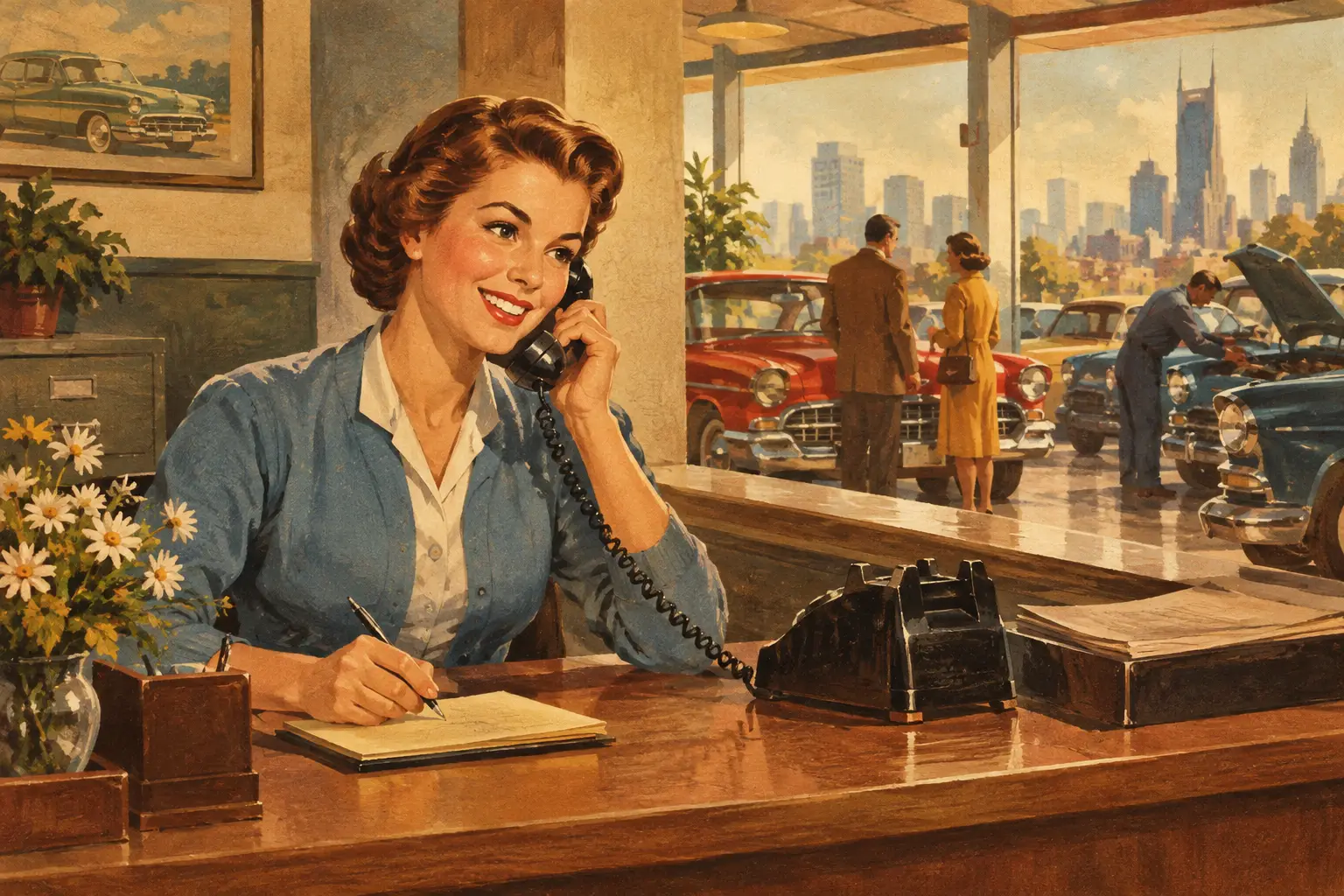
The phone rings while a service writer is explaining a brake estimate, a technician needs approval on a coolant leak, and a walk-in customer is waiting at the counter. That is the real job of a Nashville automotive receptionist: protecting the shop’s time without making callers feel brushed off.
For independent repair shops, the front desk is not just a place to answer calls. It is where first impressions are made, appointments are won or lost, and bad information can create a problem before the vehicle ever arrives. A receptionist who understands auto repair can keep the day moving. One who uses generic scripts can fill the schedule with the wrong jobs, promise timing the shop cannot meet, or leave a frustrated customer without an answer.
A Nashville Automotive Receptionist Has to Know the Shop
A good automotive receptionist does not need to diagnose a vehicle over the phone. They do need enough shop-specific knowledge to ask the next useful question and route the call correctly.
Consider a caller who says their check engine light is on. The right response is not a blind promise of a same-day repair. It is to gather the vehicle year, make, model, symptoms, whether the light is flashing, and the customer’s availability. A flashing light, a vehicle that will not start, or smoke under the hood may need a different response than a light that came on during the commute.
The same applies to common calls about brakes, A/C, tires, oil changes, alignments, inspections, towing, and warranty work. Every shop has its own service mix. Some handle diesels but not European vehicles. Some do fleet work only on scheduled days. Others will inspect a used-car purchase but do not perform bodywork or transmission rebuilds. The person answering the phone needs those boundaries before booking anything.
That is why a generic receptionist often creates more work than they remove. If they cannot tell the difference between an estimate request and a repair authorization call, the service writer still has to unwind the conversation later.
The Phone Is a Production Bottleneck
Missed calls are not just an office issue. They pull directly against billed hours.
When a technician stops working to answer a ringing phone, the repair stalls. When the owner answers between test drives, they are split between customer service and the work that pays the bills. When a service writer is tied up on a long call about a quote, the customer standing at the counter waits longer.
The answer is not to rush callers off the line. It is to give calls a consistent first response, capture the right information, and hand off only the conversations that truly require a staff member. A caller asking whether the shop works on a certain vehicle should get a direct answer. A customer approving a major repair, disputing an invoice, or calling from a breakdown needs a clear route to the right person.
In a busy Nashville-area shop, the pressure often spikes at the same times: early drop-off, lunchtime, late-afternoon pickup, and after-hours when drivers finally have time to deal with a vehicle problem. Coverage needs to account for those windows, not just standard office hours.
Booking Rules Matter More Than a Friendly Voice
A friendly phone manner gets the conversation started. Booking rules keep the schedule from turning into a mess.
An automotive receptionist should know which appointment types the shop accepts, how much time each one typically needs, and what cannot be scheduled through a simple phone conversation. A basic oil service may fit into an open slot. A no-start, intermittent electrical issue, or overheating concern may require a longer diagnostic block. Promising both at the same time because there is technically an opening is how shops end up behind by noon.
The rules should also cover drop-off versus wait appointments. Many callers want to wait while their vehicle is checked, but not every job can be handled while they sit in the lobby. Setting that expectation before they arrive prevents a hard conversation later.
Good booking logic also includes practical guardrails: same-day availability, lead time for specialty work, vehicle age restrictions, fleet account procedures, and what to do when a customer asks for an exact price before inspection. The goal is not to dodge the question. It is to explain what can be estimated over the phone and what requires the vehicle in the bay.
Pricing Calls Need Triage, Not Guesswork
Pricing calls can take up half a morning if they are handled poorly. Some are straightforward, such as a conventional oil change on a common vehicle. Others are traps for bad assumptions.
A caller asking, “How much for brakes?” may mean pads only, pads and rotors, front brakes, rear brakes, a squeal, a pulsation, or a brake warning light. A receptionist should collect the basic facts and explain the shop’s process without inventing a quote. If the shop offers starting prices or inspection fees, those can be communicated clearly. If the repair depends on an inspection, say so plainly.
This protects the customer as much as the shop. Nobody wants to arrive expecting one number and leave with a different conversation because the vehicle needs more than the caller described.
After-Hours Calls Are Still Shop Calls
A caller at 8:30 p.m. may be trying to book tomorrow’s repair, checking whether their vehicle is ready, or stranded with a possible safety issue. Sending every after-hours call to voicemail means asking that person to remember to call again during a workday. Many will not.
After-hours coverage should capture the customer’s name, callback number, vehicle details, concern, and preferred appointment time. It should also handle urgent situations with common-sense direction. A customer reporting smoke, a strong fuel smell, or a vehicle that is unsafe to drive should not be told to simply book online and wait.
There is a trade-off here. No receptionist, human or AI, should pretend to be an emergency roadside service or give repair advice beyond the shop’s approved guidance. The right move is a calm response, clear information gathering, and a documented handoff for the next business day when appropriate.
The Best Handoff Is Not a Blind Transfer
Not every call should stay with the receptionist. The question is when the shop needs to step in.
A useful handoff includes context. If a customer calls upset about a repair delay, the service writer should receive the customer’s name, vehicle, concern, and any relevant appointment information before picking up. Starting over with “What seems to be the problem?” makes an already tense call worse.
The same goes for calls involving repair approvals, comeback concerns, insurance questions, vendor issues, or technical requests that require a technician’s input. Set the handoff rules in advance. Decide who receives each type of call, what happens when that person is unavailable, and when a callback is better than interrupting active work.
Ratchet Call builds those decisions around the way each shop actually operates. The goal is not to replace the service writer’s judgment. It is to keep routine calls organized so staff can spend their attention where it earns trust and revenue.
How to Set Up Coverage That Actually Works
The first step is mapping real call scenarios, not writing a polished script. Pull a week of calls to mind. What do people ask? Which calls get missed? Which conversations always need a service writer? Which bookings cause trouble once the customer arrives?
Then document the shop’s service list, exclusions, hours, vehicle preferences, appointment types, and escalation contacts. Be specific. “We work on most cars” is not a useful rule. “No bodywork, no RVs, no collision claims, and no diesel diagnostics after 3 p.m.” is useful.
Next, test the booking rules against a normal busy day. If the schedule has one diagnostic slot left, can a receptionist use it for any warning light call? What happens if a customer needs a tow? Can a late-arriving vehicle still be checked in? The answers should reflect the capacity the shop really has, not the capacity everyone wishes it had.
Finally, review the first live calls. Listen for missed details, confusing responses, and questions that need better instructions. A front desk process improves quickly when it is tuned from actual customer conversations instead of assumptions.
The right receptionist coverage gives your shop room to work without making customers chase you down. It should sound like your front counter, follow your rules, and know when a real person needs to take the wheel.
Shops can hear it firsthand by calling the live demo line: (615) 558-5787.