A customer calling about a no-start, a flashing check-engine light, or brakes grinding does not want to sit through six minutes of hold music. They want to know whether you can help, when they can come in, and what happens next. To reduce auto shop hold times, you need more than a faster person answering the phone. You need call handling that matches how a working repair shop actually operates.
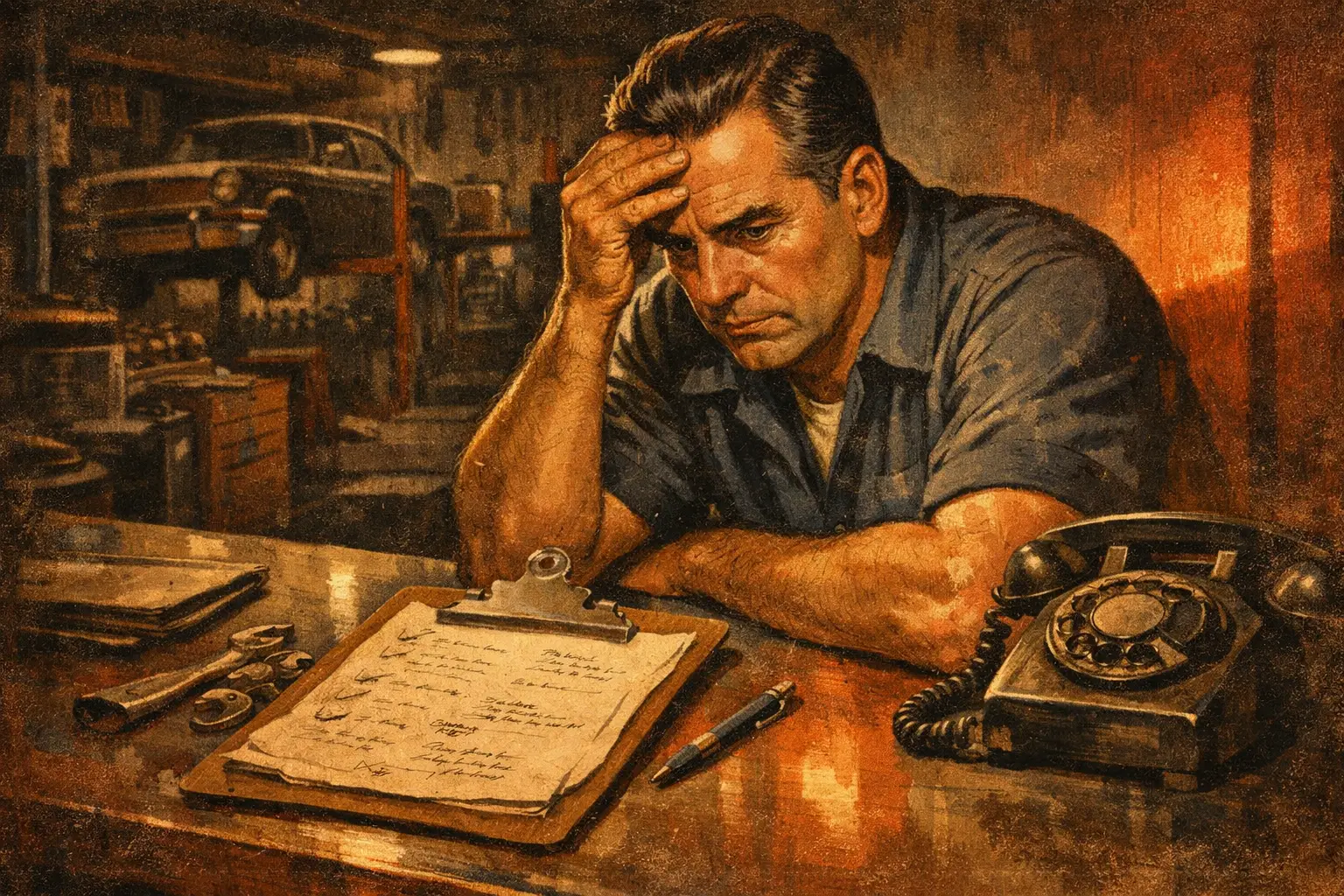
The problem is rarely that your service writer does not care. The problem is that the same person expected to answer phones is also checking in vehicles, calling on parts, explaining inspections, writing estimates, and handling the customer standing at the counter. When the bays are full, the phone becomes one more interruption. The result is long holds, abandoned calls, and work that books somewhere else.
Why long hold times cost more than one phone call
A caller who hangs up is not always a lost oil change. It may be a diagnostic appointment, a brake job, a set of tires, or a customer who would have returned for years. More often, it is a customer who calls the next shop on the list because that shop picked up.
Long holds also create friction before the car ever arrives. A caller who has waited five minutes starts the conversation irritated. Your service writer then has to recover the relationship while trying to collect vehicle details and protect the schedule. That is hard work, especially when the next phone is already ringing.
The goal is not necessarily to answer every call with a human voice in two rings. That may not be realistic for a three-bay shop on a packed Monday. The goal is to give every caller a clear, professional next step without pulling your team off productive work at the wrong time.
1. Separate calls that need a person from calls that need a decision
Not every inbound call deserves the same interruption. A customer asking whether you perform alignments needs a quick answer. A caller trying to authorize a repair needs the right service writer. A customer reporting smoke from under the hood may need immediate direction, not a standard booking slot.
Start by sorting your common call types into practical lanes: new appointment requests, existing appointment questions, estimate and repair-status calls, basic service questions, urgent safety concerns, and vendor or solicitation calls. Then decide what happens in each lane.
This is where many shops get stuck. They send every call to the same ringing phone and hope a service writer can sort it out live. Better call logic handles routine questions and collects useful details first, while saving staff handoffs for calls that actually require shop judgment.
2. Set booking rules before anyone answers
Hold times grow when the person answering has to hunt for availability. If your calendar says “open” but that opening is not suitable for a diesel diagnostic, a fleet vehicle, or a customer waiting on a ride, the call becomes a back-and-forth exercise.
Define what can be booked, how far out it can be booked, and what information is required before the appointment is confirmed. For example, you may allow oil changes and tire rotations in specific windows, reserve diagnostics for certain days, and keep same-day appointments limited to work your team can reasonably inspect.
Your rules should also cover exclusions. If you do not work on European vehicles, do not install customer-supplied parts, or cannot take large RVs, say so early and politely. A clean no is better than a vague conversation that ties up the line and creates a bad expectation.
There is a trade-off here. Tighter booking rules protect the shop, but rules that are too rigid can leave good work on the table. Review them after a few weeks. If you routinely have unused diagnostic capacity on Thursdays, adjust the windows. If same-day bookings are creating chaos, narrow them.
3. Give callers a callback promise, not an open-ended hold
Sometimes a live answer is not possible. A vehicle may be on the lift, a customer may be approving work at the counter, and both service writers may be tied up. In that moment, an honest callback promise beats an endless hold.
The key is specificity. “We will call you back shortly” is weak. “Our service writer will call you within 20 minutes” gives the caller something useful. It also creates an internal commitment your team can manage.
For the callback to work, capture the details that prevent another long conversation later: name, phone number, vehicle year/make/model, reason for the call, and whether the vehicle is safe to drive. If it is a pricing inquiry, gather the exact service requested and any relevant symptoms. A caller asking for a brake price may actually have a grinding noise and need an inspection, not a quote pulled from thin air.
4. Stop using technicians as overflow receptionists
A tech who stops mid-diagnosis to answer a phone call loses more than two minutes. They lose their train of thought, their workflow, and sometimes the accuracy that comes from staying focused. The same is true for owners who are trying to run the floor while fielding every ringing phone.
If technicians regularly answer inbound calls, that is a coverage problem, not a technician attitude problem. Build a front-desk workflow that protects billable work. Service writers should receive only the calls that need their knowledge. Techs should be brought in only when a question truly requires technical judgment.
That handoff needs context. “Customer on line one has a question” is not enough. A useful handoff says, “2016 F-150, intermittent no-start, wants to know whether it can be towed in today.” Now the staff member can make a decision instead of restarting the conversation.
5. Make after-hours calls work for the next morning
After-hours call capture is not just a voicemail with better manners. It is a chance to collect a real lead while the customer is motivated to solve a problem.
Your after-hours process should explain your operating hours, gather vehicle and service details, and identify emergencies that should not wait. It should also avoid promises the shop cannot keep. Do not offer a first-thing appointment if your morning schedule is already full or the vehicle needs a diagnostic slot.
The next morning, work those captured calls before the day gets away from you. A lead from the night before is warmer than a random follow-up three days later. Assign ownership so nobody assumes someone else returned the call.
6. Track the calls that create the longest holds
You do not need a complicated report to find bottlenecks. Listen for patterns. Are callers holding because they want repair status? Are pricing questions turning into long estimate conversations? Is one person constantly asked whether you work on certain vehicles?
Each pattern points to a fix. Repeated status calls may mean customers need better proactive updates. Repeated service questions may mean your phone coverage needs clearer shop knowledge. Long pricing calls may mean the team needs a standard way to explain why a diagnosis comes before an accurate repair quote.
Review a sample of real calls weekly, especially abandoned calls and calls that required staff handoff. The point is not to criticize the person answering. It is to tighten the process one scenario at a time.
7. Use phone coverage built around your shop, not a generic script
A generic receptionist can answer a phone. An effective shop front desk needs to know the difference between a maintenance request and a drivability complaint, when to offer a drop-off, when to transfer a customer, and when not to promise a price.
That is why Ratchet Call maps call scenarios before launch, learns your services and exclusions, and follows your actual booking and handoff rules. The objective is simple: callers get a professional response while your staff keeps the work moving.
The best phone workflow will still have exceptions. An upset customer, a comeback concern, or a vehicle that may be unsafe to drive deserves a human decision. Good coverage does not hide those calls. It recognizes them quickly, captures the facts, and gets them to the right person without making every routine inquiry a front-desk fire drill.
Hold time is not just a phone metric. It is a symptom of how work moves through the shop. Build clear call lanes, give your team usable booking rules, and make sure every caller leaves with a next step. Your service writers will get breathing room, your techs will stay on task, and more customers will make it onto the schedule.
Shops can hear it firsthand by calling the live demo line: (615) 558-5787.
For efficiency, our AI support gets the PSI right and sweeps the floor, like a first-day tech. But we torque every nut before it leaves our shop and label it RatchetCALL.