The phone rings while your service writer is explaining a brake estimate, a tech needs an approval, and a tow truck is dropping off a no-start. That is where the answering service versus service writer question gets real. The issue is not whether a person or system can say hello. It is whether the caller gets the right next step without your front counter getting buried.
For most independent shops, a service writer is still the person who turns uncertainty into a repair order. They listen for symptoms, spot a bad fit, manage expectations, and keep a customer from treating a rough estimate like a promise. But that does not mean a service writer needs to personally answer every call that comes through the line.
What a Service Writer Actually Does
A good service writer is not just a receptionist with access to the calendar. They are the traffic controller for the shop. They have to hear the difference between a customer asking for an oil change and a customer whose engine light is flashing on the interstate. They know when a same-day slot is realistic, when a vehicle needs to be towed, and when the shop does not perform the work being requested.
They also handle the calls that require judgment. A repeat customer may need an update on a vehicle already in the bay. A customer upset about a previous repair needs a calm handoff to the right person. A caller asking for an exact transmission price needs to understand that diagnosis comes before a meaningful quote. That is service-writing work, not simple phone coverage.
The problem is that the same writer also gets hit with low-complexity calls all day: hours, address, basic service availability, appointment requests, status requests, and people looking for work the shop does not offer. Every interruption pulls them away from the customer standing at the counter or the estimate that needs to go out before noon.
Where an Answering Service Helps a Repair Shop
An answering service earns its keep when it covers the calls that must be answered quickly but do not always need a service writer’s full attention. That coverage can include after-hours callers, lunch-hour overflow, peak morning traffic, and the stretch between closing the office and locking up the last car.
The key is whether the service understands how an auto shop operates. A generic call center may take a name and number, but that is not enough if the caller is trying to book a state inspection, asking whether you work on European vehicles, or needs to know whether a towing situation should be treated as an appointment request or an urgent handoff.
A shop-focused AI receptionist can answer within the shop’s rules. It can explain the services you handle, avoid services you exclude, collect vehicle and concern details, book within approved windows, and route the calls that need a real person. Instead of sending your staff a vague message that says, “Caller needs help,” it can capture the information a service writer needs to take over without starting from scratch.
That is the practical value: fewer missed opportunities and fewer unnecessary interruptions. The shop still controls what gets booked, what gets escalated, and what callers are told.
Answering Service Versus Service Writer: It Is Not a Fair Either-Or
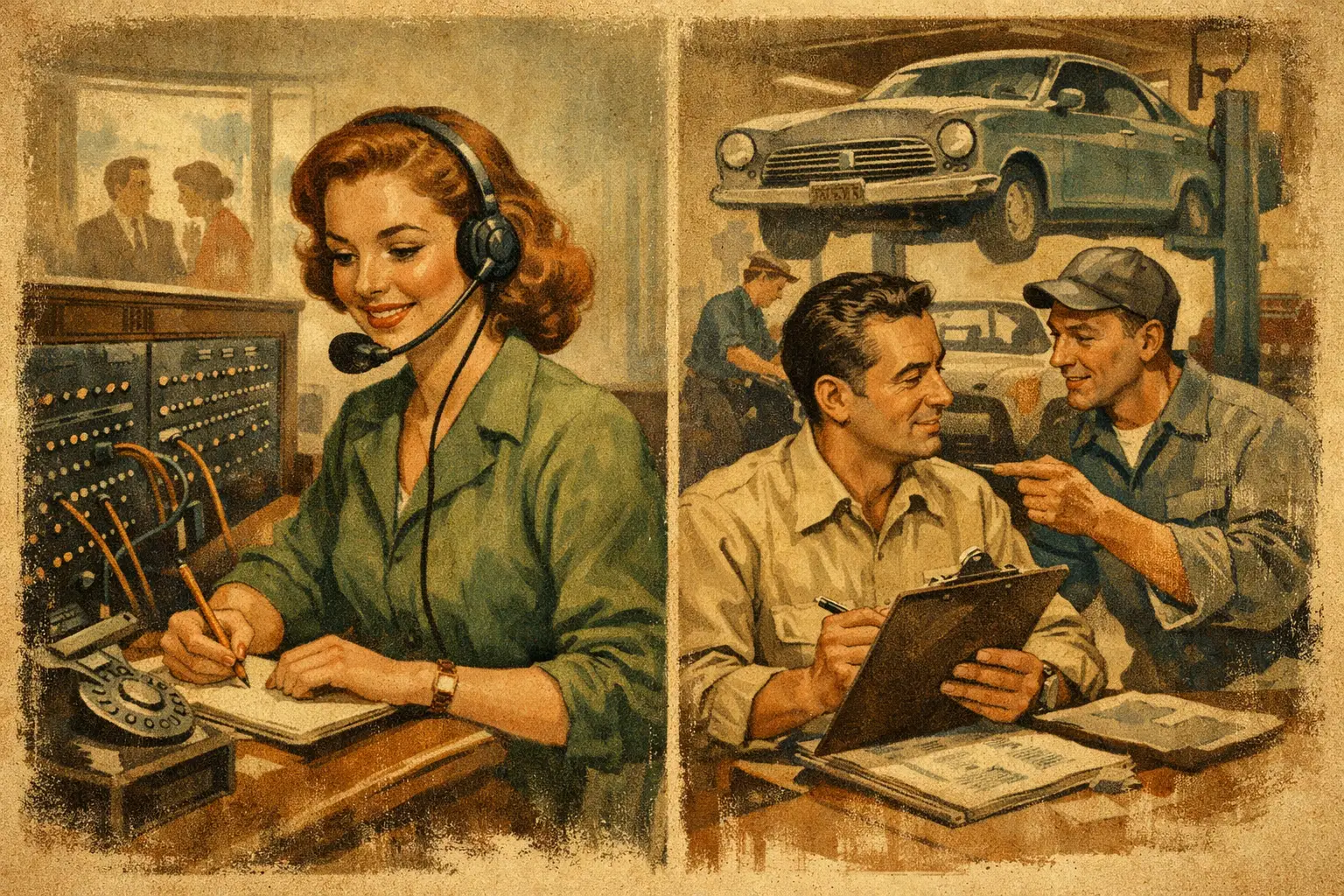
Comparing an answering service to a service writer as if one must replace the other misses the point. They serve different parts of the same workflow.
A service writer owns the conversation once it becomes diagnostic, financial, emotional, or operationally complicated. They set expectations around inspection, parts availability, repair priority, and authorization. They work with the technician and the customer to keep repairs moving. No canned script should pretend to do all of that.
An answering service handles the front-end load when it has the right instructions. It can make sure a new customer gets a timely response. It can stop an after-hours brake concern from becoming a voicemail nobody hears until the next afternoon. It can collect enough information to make a live handoff useful instead of disruptive.
The best setup does not position the system as a replacement for a sharp service advisor. It protects that advisor’s time for the work that produces better repair orders, clearer approvals, and a better customer experience.
The Calls That Should Stay With Your Team
Some calls should never be treated like a basic booking request. A good phone workflow flags them early and gets them to the right person.
Safety-related complaints need care. If a caller reports a flashing check engine light, brake pedal trouble, overheating, steering problems, smoke, or a vehicle that will not safely drive, the response should follow your shop’s escalation rules. It should not casually promise a time slot without considering the condition of the car.
Estimate disputes and warranty concerns also belong with your team. These conversations can turn sour fast when the caller feels dismissed or gets a response that ignores shop history. The right move may be a live transfer during business hours, a high-priority message, or a scheduled callback from the manager.
Then there are job-fit questions. Maybe your shop does not install customer-supplied parts, rebuild engines, work on certain makes, or perform body work. An answering system should know those exclusions well enough to be honest. Booking work you will decline at the counter is not a win. It wastes a bay opportunity and damages trust before the vehicle arrives.
What Makes Phone Coverage Useful Instead of Annoying
The difference between helpful coverage and a frustrating robot is shop-specific setup. The phone agent needs more than your hours and address. It needs your real booking logic.
That means defining which services can be booked online or by phone, how much lead time you need, what appointment windows are available, and which concerns require review first. It means setting rules for waiting customers, drop-offs, tow-ins, fleet vehicles, and after-hours messages. It also means deciding exactly when a caller should be transferred to a person.
Voice matters, too. Customers calling an independent repair shop do not want corporate language. They want a clear answer from someone who sounds like they understand the difference between a routine maintenance request and a car that died in a grocery store parking lot. The right tone is calm, straightforward, and never overpromises.
At Ratchet Call, that work starts before the first live call. The call scenarios, service knowledge, exclusions, calendar rules, and handoff paths are mapped to the actual shop. Early calls are reviewed and tuned so the coverage gets sharper where it counts. That is a much different approach than turning on a generic answering line and hoping it represents your business well.
How to Decide What Your Shop Needs
Start by looking at the calls you miss, not just the number of calls you receive. If most missed calls are new customers asking for service, after-hours appointment requests, or routine questions, reliable answering coverage can create immediate value. Those callers are often ready to act, and voicemail adds friction at exactly the wrong moment.
If your service writer spends the day handling involved estimates, managing a packed schedule, and resolving issues with vehicles already in process, taking routine incoming calls may be costing you more than it appears. The interruption is not just the two-minute phone call. It is the time needed to regain focus, pull up the repair order, and get back to the customer in front of them.
On the other hand, if nearly every call requires deep knowledge of an active repair, a specialty vehicle, or a complex customer history, your shop may need stronger internal phone coverage first. An answering service is not a substitute for a service department that has no capacity to follow up. It works best when there is a clear owner for escalations and booked appointments.
A simple test is this: can you write down how you want the first 90 seconds of common calls handled? If so, much of that first-contact work can be covered consistently. If the answer changes based on vehicle condition, repair status, pricing, or customer history, that is where the service writer takes the wheel.
Build the Handoff, Not Just the Answer
The phone answer is only the beginning. A caller should know whether they are booked, waiting for a callback, being transferred, or being asked to bring the vehicle in for an inspection. Your team should know who called, what they drive, what they reported, and what was promised.
That handoff is where shops either gain control or create more desk clutter. Set clear ownership for new appointment requests, active repair status calls, upset customers, and emergency-style concerns. Review missed calls and abandoned calls regularly. If the same question keeps showing up, improve the phone rules or add the answer to the shop’s service knowledge.
Your service writers should not have to choose between answering every ring and serving the customers already in the building. Give routine callers a useful first response, reserve experienced judgment for the calls that need it, and keep the bays moving. Shops can hear it firsthand by calling the live demo line: (615) 558-5787.