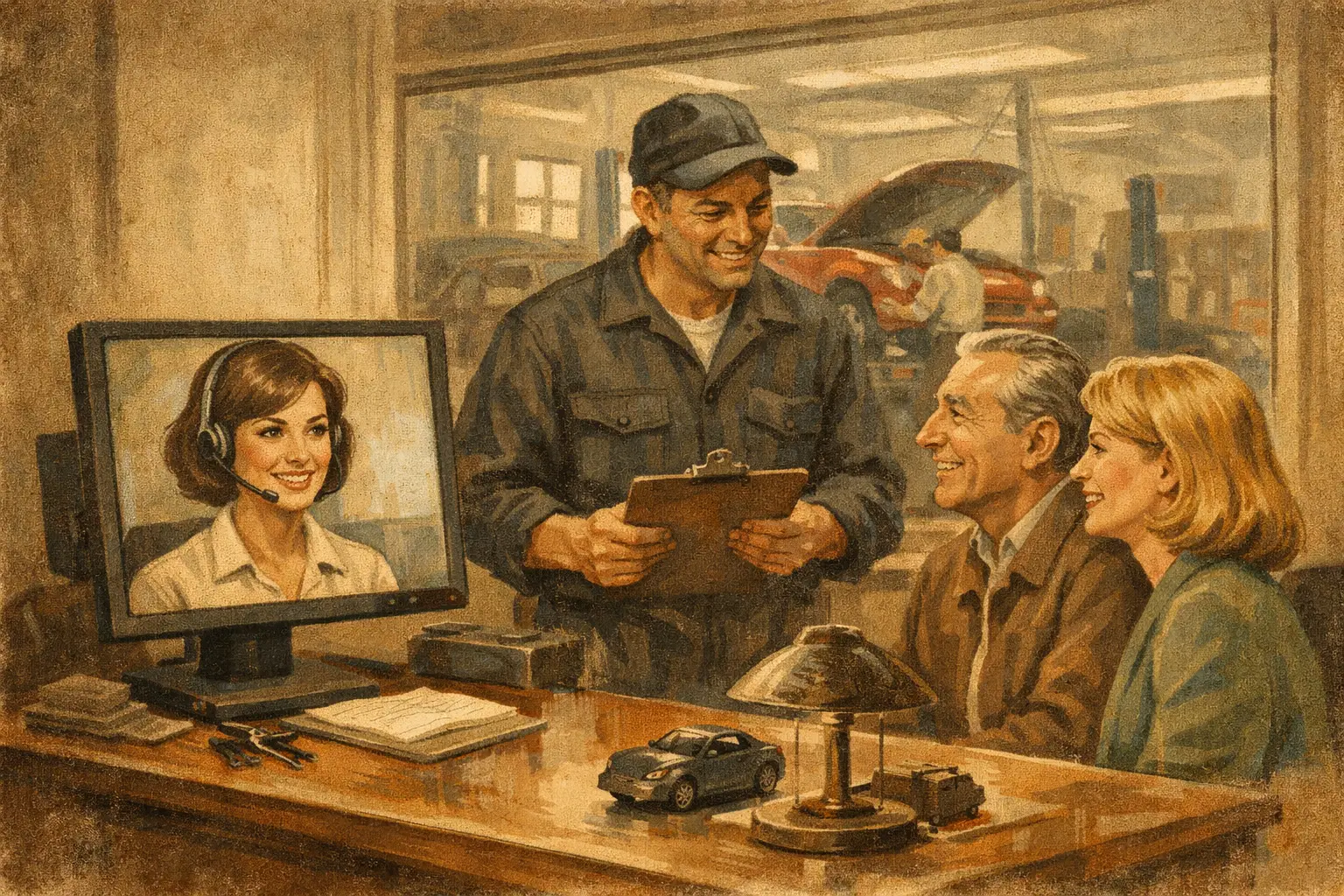
The phone rings while your service writer is explaining a brake estimate, a tech needs approval on a parts change, and a customer is waiting at the counter. That is where auto shop AI receptionist results either matter or they do not. If the system only answers calls, it is not doing enough. The real result is fewer lost repair opportunities without creating bad appointments, confusing promises, or more cleanup work for your team.
For an independent shop, the goal is not to replace good service writers. It is to protect their time and make sure every caller gets a useful first response, whether they call at 10:30 on a slammed Tuesday or 8:15 after the doors are locked.
What Good Auto Shop AI Receptionist Results Actually Mean
A useful AI receptionist should produce operational results that show up in the shop, not just a report full of call statistics. Answer rate matters, but it is only the first step. A caller who gets an immediate answer but leaves without a clear next step has not become a customer.
The results worth watching are calls answered, appointments correctly booked, leads captured after hours, and interruptions removed from the people trying to run the shop. You should also see better call documentation. When the team knows the caller’s name, vehicle, concern, requested timing, and any promises already made, the handoff starts on solid ground.
There is a difference between a full calendar and a useful calendar. A shop does not benefit from a system that books a diesel repair into a shop that does not work on diesels, promises same-day diagnostics when the schedule is full, or turns every pricing question into a made-up quote. Good results include fewer of those messes.
Answered calls should sound like your shop
The caller should hear a professional, direct greeting and get answers that fit your operation. That includes your hours, location, services, common exclusions, drop-off process, and booking availability. If the shop does not install customer-supplied parts, does not perform alignments, or cannot take walk-ins that afternoon, the receptionist needs to know that.
Generic call handling creates friction because it treats an auto repair call like any other appointment request. Shop calls have context. A no-start, a check-engine light, a tire concern, a tow truck arriving, and a customer asking for an oil change before a road trip should not all follow the same script.
Booked work should match real capacity
Appointment quality is more important than raw appointment volume. An AI receptionist needs rules for what can be booked online or by phone, how far out customers can schedule, what appointment windows are available, and when a caller needs a live staff member.
For example, a basic maintenance appointment may fit into a standard opening. A transmission concern, intermittent electrical issue, or vehicle being towed in may need a different workflow. The right system gathers the first details, sets expectations, and passes the call to the right person when judgment is required.
That is why customized call logic matters. It lets the shop decide what the AI can handle confidently and what must be escalated. The best outcome is not maximum automation. It is the right amount of automation for your shop.
The Results Usually Show Up in Three Stages
Most shops do not flip on an AI receptionist and immediately see a perfect front desk. The early win is coverage. Then comes tighter booking and cleaner handoffs. After that, the shop can refine the call rules based on what real customers are asking.
First, missed-call leakage drops
The simplest improvement is that fewer callers hit voicemail, hang up, or call the next shop in the search results. This is especially valuable during busy service hours and after closing. A customer calling at 6:30 p.m. about a vehicle that will not start may not wait until morning to leave a voicemail.
After-hours capture does not mean promising service before the shop is open. It means collecting the concern, vehicle details, contact information, and preferred follow-up time so the lead is ready when the team returns. That is a much better start than a generic voicemail with a first name and a garbled phone number.
Next, the front desk gets breathing room
When service writers stop taking every basic call live, they get back time for estimates, customer updates, repair-order review, and face-to-face conversations. Techs are less likely to get pulled off productive work to answer a question that the front desk already has a policy for.
This benefit is easy to underestimate. The cost of a ringing phone is not only the missed call. It is the interruption to the estimate being written, the customer standing at the counter, and the technician who loses focus halfway through a diagnosis.
A good receptionist workflow absorbs the repeatable questions and reserves live handoffs for the calls that truly need a person. That might include an upset customer, a warranty question, a complicated fleet request, an active repair status call, or a pricing conversation that requires a service writer’s judgment.
Then, the shop starts improving the call playbook
The first live calls teach you where the real edge cases are. Maybe callers use a different name for a service than your booking categories. Maybe your team wants every overheating call routed differently. Maybe customers frequently ask whether they can bring their own parts, and the answer needs to be clearer.
This tuning is where a purpose-built service separates itself from a generic answering tool. Ratchet Call maps common scenarios before launch, trains the agent on the shop’s actual services and exclusions, and adjusts workflows after live calls show what needs tightening. The objective is for calls to get more accurate over time, not just more automated.
How to Measure AI Receptionist Results Without Fooling Yourself
Do not judge performance from one hectic day or one quiet week. Start with a baseline. Look at your existing missed calls, voicemail volume, after-hours inquiries, booking sources, no-shows, and the number of times staff members are interrupted to answer routine questions.
Then review calls alongside the numbers. A higher booking count is good only if appointments arrive with correct customer information and reasonable expectations. A lower transfer rate may look efficient, but not if callers with urgent or sensitive issues cannot reach a person when they should.
Track these areas over several weeks:
- Answered inbound calls versus missed calls and voicemail.
- Appointments booked, including how many fit the right service category and time window.
- After-hours leads captured with usable vehicle and contact details.
- Live transfers that reached staff for the right reason.
- Repeat issues, such as callers receiving unclear answers about diagnostics, pricing, drop-offs, or service exclusions.
Your service manager should listen to a sample of calls, especially in the first few weeks. Ask simple questions: Did the caller get a straight answer? Did the appointment make sense? Did the system protect the team’s time? Did it promise anything the shop cannot deliver?
Those questions get closer to the truth than a dashboard alone.
Where Shops Can Get Disappointed
An AI receptionist is not a magic fix for a disorganized schedule, unclear service policies, or a team that never returns follow-up calls. If your calendar rules are loose, the AI can only book around the rules it receives. If no one owns next-morning follow-up for after-hours leads, good call capture will still go cold.
There are also calls that should not be fully automated. Angry customers, safety concerns, active repair disputes, payment conflicts, and detailed diagnostic conversations often deserve a human handoff. The right workflow recognizes that quickly instead of forcing the caller through a dead-end script.
Voice and tone matter, too. A system can be technically accurate and still feel wrong if it sounds overly casual, too sales-heavy, or unfamiliar with how your shop speaks to customers. The caller is trusting you with a vehicle and often a stressful problem. Clear, calm, shop-specific communication earns more confidence than flashy technology.
Set the System Up Like a Service Writer
The best results begin before the first call. Treat setup like training a new front-desk employee. Give the system the same information a capable service writer needs: what you service, what you do not, your hours, booking windows, preferred appointment types, drop-off rules, diagnostic policy, common FAQs, and the situations that require a transfer.
Be specific about the gray areas. Can the AI say an oil change is available this week but not guarantee a precise completion time? Can it explain that repair pricing requires inspection? Should tow-ins be logged differently from scheduled appointments? Who receives a call from a customer asking about an existing repair order?
Clear rules make the customer experience cleaner. They also let your staff trust the calls arriving in the schedule. When the receptionist follows the way the shop actually operates, it becomes support for the front desk instead of another system somebody has to babysit.
The best test is a simple one: at the end of a busy day, are more good customers getting a clear next step while your team spends more time on vehicles and people already in the building? If the answer is yes, the phone coverage is doing its job.
Shops can hear it firsthand by calling the live demo line: (615) 558-5787.