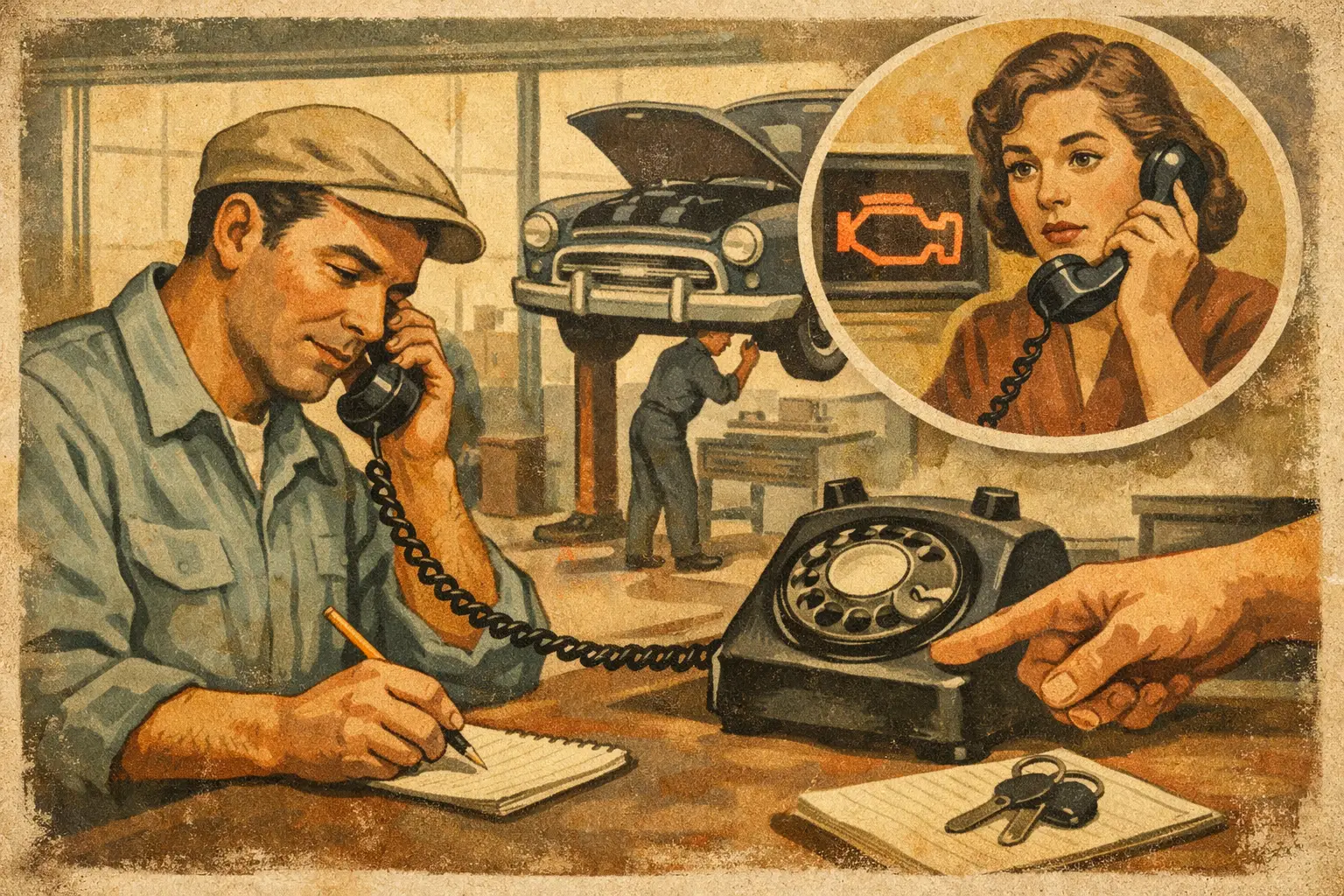
The phone rings and your service writer is busy checking in a tow-in. A technician needs an approval and a customer at the counter wants an update. This is where a guide to auto shop phone systems should start: not with features but with what happens when nobody can answer the phone. Every missed call can be a brake job, an appointment, an oil service or a customer who calls the shop down the street instead.
A good phone setup does more than just pick up the phone. It protects the time spent in the service bays gives callers an answer and puts the right work on the schedule without promising something the shop cannot deliver. For shops the best system is the one that works like a sharp service writer: consistent, informed and clear about the next step.
What an Auto Shop Phone System Must Handle
A repair shop phone system has a job than a general business line. Callers are often stressed, in a hurry and not clear about what they need. For example "my check engine light came on" is not an appointment type. Neither is "my car is making a noise." The person answering the phone needs to gather detail to route or book the call correctly without pretending to diagnose the vehicle over the phone.
At a minimum the system should answer during hours capture after-hours calls, collect customer and vehicle details handle common questions and follow the actual booking rules. It should also know when to stop talking and hand the call to a human. A fleet account with a vehicle an upset customer asking for the owner or a caller with a safety concern should not get stuck in a generic script.
The goal is not to automate every conversation. The goal is to make sure every caller reaches an outcome. Every caller should get an answer and the shop should not promise something it cannot deliver.
Start With Your Shop’s Call Flow
Before choosing hardware a receptionist service or an AI phone agent map what happens after the phone rings. Most shops skip this step then wonder why calls get booked wrong or messages come through with half the information missing.
Start with the calls you receive often. New customers may ask about availability, inspections, maintenance, warning lights, brakes, tires, AC or a no-start. Existing customers may need a status update have a question about an estimate or need to change an appointment. Then there are edge cases: warranty work, tow-ins, diesel vehicles European makes, commercial accounts, collision repair and services the shop does not offer.
For each call type decide what the caller should hear and what should happen next. A straightforward oil change may be booked into an approved time window. A drivability complaint may need an appointment. A request for a service the shop does not perform should get a direct answer instead of a vague promise that creates trouble later.
Build Booking Rules Around Real Capacity
Calendar access without rules is how a shop gets jammed up. The phone system needs to know which appointment types can be booked how much lead time they require and when the schedule is closed for lunch, meetings or heavy production blocks.
Do not treat every slot as available for every job. A 30-minute state inspection, a tire rotation and a no-start diagnostic do not consume the resources. If the shop only takes diagnostics in the morning needs parts confirmations before scheduling repairs or does not accept same-day appointments after a certain time put that into the call logic.
This is where a purpose-built setup earns its keep. The caller gets an answer and the service writer does not arrive the next morning to find three mystery diagnostics stacked in the same hour. The phone system should make the service writers job easier not harder.
Choose Coverage That Matches How Your Shop Works
There are ways to cover inbound calls. A traditional multi-line phone system can route calls between service writers, the owner and a voicemail box. It is familiar. It still depends on someone being free. During rush periods it often means the same calls bounce around until they disappear into voicemail.
A live receptionist can offer a touch and handle more complicated conversations. The trade-off is staffing cost, training time, breaks, call-volume swings and after-hours coverage. For a shop with a steady front counter, that may make sense. For a shop where the service writer is also ordering parts and calling vendors it may not.
An automotive-specific AI receptionist can cover the gap when calls outnumber people. The key phrase is automotive-specific. A generic answering service may collect a name and number. It will not naturally understand the difference between scheduling a diagnostic quoting a tire size explaining an inspection policy or escalating a request for an estimate update.
Ratchet Call is built around that shop reality. Than dropping a generic bot on the phone line the setup maps the shops call scenarios, service knowledge, exclusions, calendar rules and live handoff path before calls go live.
Give Callers Answers Without Giving Away Bad Information
Price questions are where phone handling can go fast. Customers want a number. The shop needs information to avoid quoting the wrong repair the wrong vehicle or a job that turns into a fight at the counter.
The phone system should be able to handle pricing inquiries with judgment. For services it can explain that pricing depends on vehicle details, parts and inspection findings then collect the year make, model, engine and concern. For diagnostics it should explain the shops process of guessing at a repair cost. For jobs the shop does not perform it should say plainly.
The same approach applies to FAQs. Hours, address, payment methods, towing policies, warranty questions, wait times and whether the shop works on vehicle types can all be handled quickly when the answers are configured correctly.. There should be guardrails. Do not let the phone system promise a same-day turnaround approve warranty coverage or tell a customer a vehicle is safe to drive without the shops direction.
Design a Clean Handoff to Your Staff
The best phone systems do not try to win every call. They make the handoff easier.
Set triggers for transferring a caller to the shop. Good examples include a customer asking for an employee an active repair status question, an upset caller, a request for the owner, a complicated fleet matter or a safety-related complaint. If nobody is available the system should take a message and tell the caller what happens next.
A complete message is more than a callback number. The staff should receive the callers name, vehicle information, reason for the call, appointment preference and any urgency or promise made during the conversation. That lets the service writer call back prepared of restarting the whole exchange with "Can I get your year make and model?"
Handoff rules should also reflect the teams availability. If the service writer is tied up from 7:30 to 9:00 during morning drop-off route calls differently or capture them for a defined callback window. A system that interrupts the person every two minutes is not solving the problem.
Review the First Calls and Tune the System
No phone setup is finished the day it turns on. The first live calls show what customers actually ask, where language needs work and which edge cases were missed.
Review calls closely during the week. Listen for assumptions, incomplete vehicle details, awkward wording, bad appointment fits and callers who did not get a clear next step. If customers regularly ask whether the shop works on diesels, hybrids, extended warranties or particular makes add answers. If a booking rule is too loose tighten it before it creates a schedule mess.
Track a few numbers: calls answered, appointments booked, calls that required staff handoff, callback requests and calls missed after hours. The point is not to drown the shop in reporting. It is to see whether the system is taking pressure off the desk and turning more rings into legitimate work.
A Guide to Auto Shop Phone Systems Comes Down to Trust
Callers cannot see the shops bays, diagnostic equipment or the quality of work when they first contact the shop. They hear the phone. A rushed, inconsistent or unanswered call tells them one story. A clear answer, realistic appointment option and professional follow-up tells them another.
Set up the phone coverage the way the shop runs repairs: use the right process account for exceptions and inspect the work after it is done. The right system should let the staff stay focused on customers in front of them and vehicles, in the bays while callers still get treated like their business matters.
Shops can hear it firsthand by calling the live demo line: (615) 558-5787.