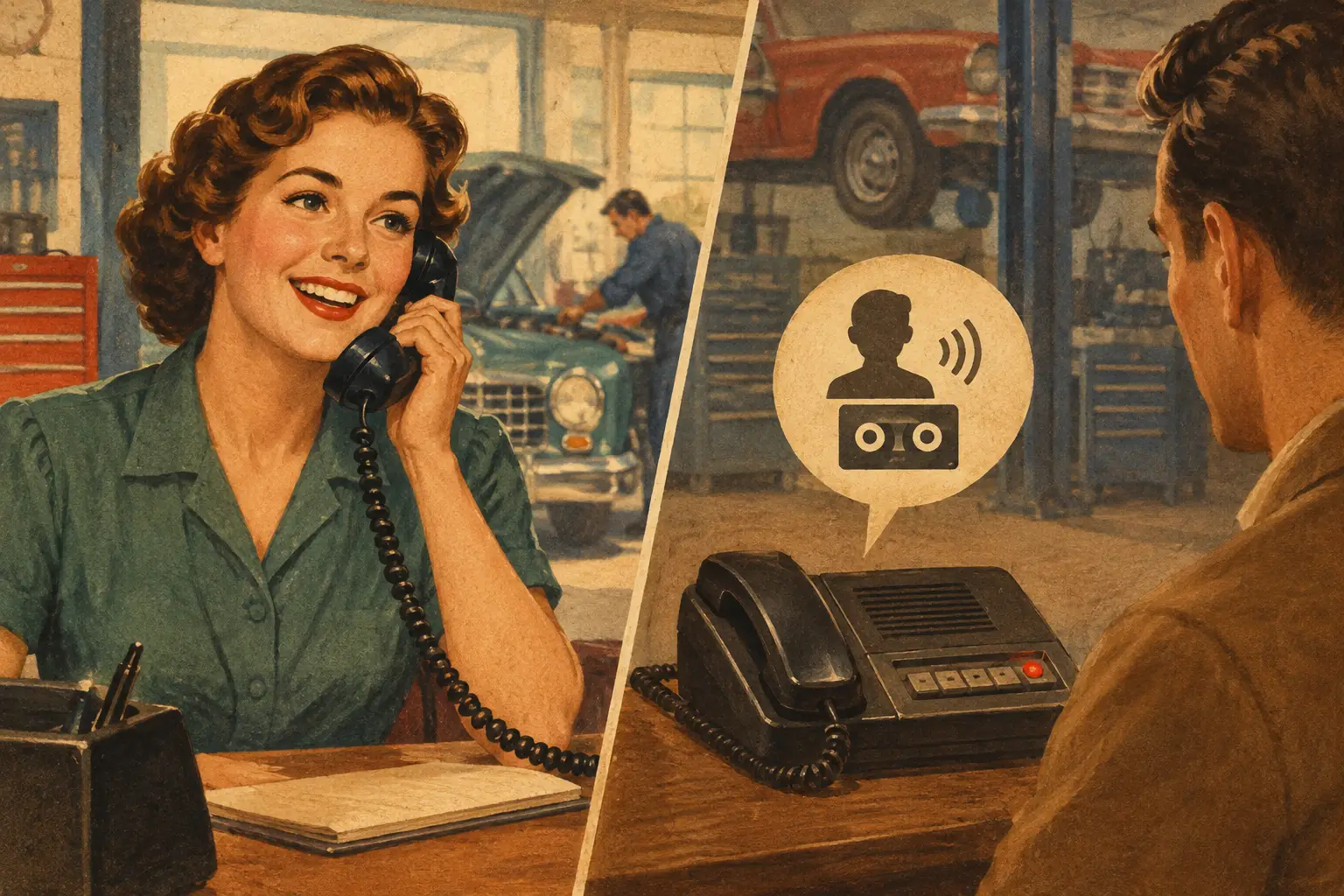
The phone rings while a tech is diagnosing a no-start, the service writer is explaining an estimate, and the owner is chasing a parts delay. That is when live answering versus voicemail stops being a simple phone-system choice. It becomes a decision about whether the next repair order gets booked or disappears to the shop down the road.
Voicemail has its place. But for independent repair shops, it often asks callers to wait at the exact moment they are looking for a fast, confident answer. A live answering setup can protect the service drive, capture after-hours demand, and keep the people turning wrenches from getting pulled into every ringing phone.
Why voicemail loses more calls than it records
Most customers do not call an auto repair shop because they are casually browsing. Their check engine light came on. Their brakes are grinding. Their vehicle will not start in the driveway before work. They want to know whether you can help, how soon they can get in, and what happens next.
When they reach voicemail, they are being asked to leave a message and trust that someone will return it. Some will. Many will hang up and call another shop, especially if they need same-day help or have already tried two other numbers. The shop may still see the missed-call notification, but the opportunity is already cooling off.
The cost is not limited to lost appointments. A full voicemail box, a delayed callback, or a rushed return call can make a capable shop feel disorganized before anyone has inspected the vehicle. That is tough to overcome, even when the actual repair work is excellent.
Voicemail also creates a work pile for the front desk. Someone has to listen, sort out incomplete messages, call people back, check the schedule, and repeat the same questions that could have been handled on the initial call. During a packed morning, callbacks tend to slide behind customers standing at the counter and vehicles already in the bays.
Live answering versus voicemail: what changes at the shop
Live answering means a caller reaches a real conversation instead of a recording. For a repair shop, that conversation should not sound like a generic answering service taking a name and number. It should work more like a trained front-desk service writer: greeting the customer properly, understanding the reason for the call, following the shop’s rules, and moving the call toward the right next step.
That might mean booking an oil service into an available window. It might mean explaining that the shop does not perform bodywork, install customer-supplied parts, or handle certain specialty vehicles. It may mean taking details on a drivability issue and flagging it for a staff handoff. The value is not simply that someone answered. The value is that the caller got useful direction without your team stopping what it was doing.
For busy shops, the biggest gain is fewer interruptions. A technician should not need to step away from a diagnosis to answer, “Do you do brakes?” A service writer should not have to abandon an estimate to collect a caller’s VIN, concern, and preferred appointment time. Live coverage handles the first layer so your people can stay focused on the work already in front of them.
The customer experience is faster, but it must be accurate
Speed alone is not enough. A live answer that promises an appointment you cannot honor creates a different problem. So does an answering service that quotes prices without knowing your labor rate, inspection process, vehicle details, or shop policy.
The right setup needs guardrails. It should know your hours, service area, common services, exclusions, booking windows, and when to escalate. If you only schedule diagnostics in certain slots, the caller should not be dropped into a quick-service opening. If an upset customer is calling about a repair already in progress, the call should be routed or flagged for the right person instead of treated like a new appointment request.
That is the difference between coverage and real front-desk support.
When voicemail still makes sense
Voicemail is not automatically a mistake. A one-person specialty shop with a light call volume may prefer it, especially if the owner has a disciplined process for returning messages quickly. It can also work as a backup for unusual situations, such as an extended outage or a limited period when no appointment information is available.
The question is whether your shop can return calls fast enough, consistently enough, to meet customer expectations. If every message gets a helpful callback within a few minutes, the downside is smaller. If messages sit for an hour during the morning rush, get returned after closing, or vanish under a stack of notifications, voicemail is costing more than it saves.
There is also a difference between after-hours voicemail and daytime voicemail. After closing, a clear message can capture basic information. But after-hours callers often include tomorrow morning’s first appointments, tow-related questions, and customers deciding where to take a vehicle. Capturing those calls with the right details can give your team a cleaner start the next day.
What a repair-shop live answering process should handle
A useful live answering system follows the way your shop actually works, not a generic customer-service script. Before it takes calls, the workflow should be mapped around the decisions your front desk makes every day.
Start with service knowledge. The answering process needs to recognize common requests such as maintenance, brakes, AC concerns, batteries, no-starts, check engine lights, alignments, and diagnostics. Just as important, it needs clear boundaries around work you do not perform. A customer who needs collision repair, glass work, a transmission rebuild, or a service your shop excludes should get a direct, professional answer instead of being booked by mistake.
Next comes calendar logic. Same-day appointments, diagnostic slots, drop-off rules, loaner availability, and lead times all matter. A shop that books oil changes all day but needs diagnostics scheduled in specific windows should have those rules reflected in the call flow. Otherwise, live answering creates calendar cleanup instead of calendar control.
Then build handoffs. Some calls should be handled without involving the team. Others need a person immediately. Examples include an active repair status question, an angry caller, a fleet account issue, a tow truck at the gate, or a customer asking about a repair authorization. The system should know when to take a message, when to transfer, and when to mark a request for prompt follow-up.
Finally, review the real calls. The first week tells you where callers get specific, where wording needs adjustment, and which exceptions show up more often than expected. Good phone coverage gets better after those real-world edge cases are tuned, not after a one-time setup call.
The math is bigger than one missed appointment
It is easy to look at live answering as an added operating expense and compare it only to a receptionist’s wage. That misses the bigger picture. The comparison should include missed calls, abandoned voicemail messages, lost first-time customers, service-writer interruptions, and the time spent playing phone tag.
One captured brake job, diagnostic appointment, or new customer relationship can matter far more than a string of calls that go to voicemail. There is also a capacity benefit. When your service writer is not constantly breaking concentration to answer basic questions, estimates move faster, customer updates improve, and the counter feels less chaotic.
That does not mean every caller should be booked automatically. Good live answering protects the shop from bad-fit work and unrealistic expectations, too. It can screen for the information you need, communicate your policies clearly, and set up the next conversation with enough context that your staff is not starting from zero.
Choosing the right answer for your shop
If your phone volume is low, callbacks are consistently fast, and your schedule is simple, voicemail may be enough for now. But if your team regularly misses calls while serving customers, working estimates, or handling vehicles in the shop, live answering deserves a closer look.
Ask a plain question: when a new customer calls at 10:30 on a busy Tuesday, what actually happens? If the answer is “they leave a message and we get back to them when we can,” there is a leak in the service drive. If the answer is “they get clear help, the right appointment option, or a proper handoff,” you are protecting work before it ever reaches the bay.
Ratchet Call is built around that second outcome, with shop-specific call logic, booking rules, exclusions, and escalation paths that reflect how independent repair shops operate. You wrench. We answer.
The goal is not to put a fancy voice on the phone. It is to make sure every legitimate caller reaches a front door that is open, informed, and ready to move the job forward. Shops can hear it firsthand by calling the live demo line: (615) 558-5787.