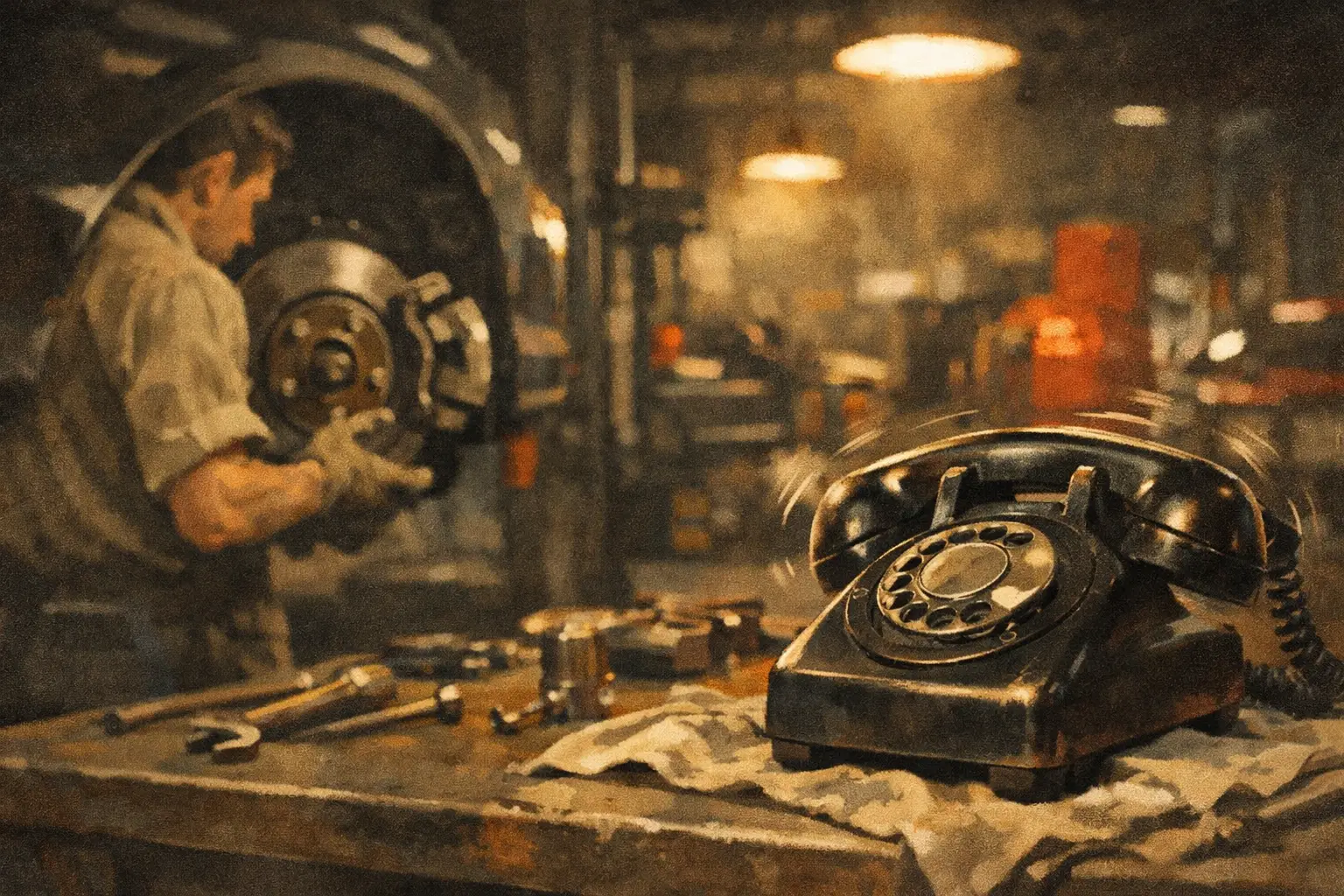
The phone rings right when a tech has a transmission apart, a service writer is checking in a walk-in, and an advisor is already juggling two estimates. That is why the top ways to stop phone interruptions matter so much in an auto repair shop. Every call might be revenue, but every interruption also carries a cost in lost focus, slower turnaround, and mistakes at the counter.
Most shops do not have a phone problem. They have a workflow problem that shows up through the phone. If every ring pulls the same people off the same high-value work, the shop stays reactive all day. The fix is not just answering faster. It is building a system that decides which calls deserve immediate attention, which ones can wait, and which ones should never interrupt the floor in the first place.
Why phone interruptions hit shops harder than other businesses
In a repair shop, the person answering the phone is rarely just answering the phone. They are often quoting brakes, checking parts status, dispatching work, handling keys, calling customers, and trying to keep the day from going sideways. When that person gets interrupted every few minutes, the whole front desk slows down.
The bigger issue is task switching. A service writer who pauses an estimate to answer a pricing question is not just losing one minute. They are losing their train of thought, risking a wrong line item, and creating delay for the customer standing in front of them. A shop owner who stops diagnosing a drivability issue to answer a call is burning labor on work that does not require owner-level attention.
That is why the top ways to stop phone interruptions are not about avoiding customers. They are about protecting the right work at the right time while still making sure calls get handled professionally.
1. Separate urgent calls from routine calls
Not every inbound call deserves the same response speed. A customer asking whether you work on diesels is different from a customer whose tow truck is five minutes out. If your team treats every ring as equally urgent, everything becomes urgent, and that is where chaos starts.
Start by defining what actually needs a live interrupt. Breakdowns, same-day schedule changes, active repair authorizations, and vehicles already in process usually belong near the top. Basic hours, directions, service questions, and general price shoppers usually do not.
Once you make that distinction, your call handling can match reality. The phone stops being a random alarm and starts acting like a managed intake channel.
2. Give one role ownership of live call flow
A common mistake in busy shops is shared responsibility with no real owner. When everybody can answer the phone, nobody really owns it. Calls bounce around, people put customers on hold too long, and the nearest available body gets dragged off whatever they were doing.
If you have a dedicated service writer, that person should usually control the flow, not necessarily answer every single call personally, but own how calls get prioritized, routed, and returned. If you are a smaller shop, assign time blocks or clear rules for who handles what. Even simple boundaries help.
For example, one person may own active customer updates and approvals, while another handles new inbound appointment requests. That is a lot better than five people interrupting each other all day.
3. Tighten your booking rules
A lot of phone traffic gets messy because the shop has not clearly decided what can be booked, when, and by whom. That creates long calls, repeated callbacks, and front-desk bottlenecks.
If your team has to stop and debate whether a timing chain estimate gets a same-day inspection slot, the phone call drags on and pulls attention off other work. The better move is to set clear booking logic ahead of time. Decide which services can be scheduled directly, which need a diagnostic intake first, which jobs require manager review, and what your exclusions are.
This matters even more with common edge cases. European cars, warranty work, customer-supplied parts, tow-ins, and large engine jobs all need rules. When those rules are documented, the person handling the call can move quickly without interrupting the whole shop for approval.
4. Stop using technicians as backup reception
This one sounds obvious, but it happens every day. The front gets slammed, the phone keeps ringing, and somebody yells into the bays for help. Now a tech with dirty hands is answering a customer asking about tire pricing or trying to write down a callback number while standing next to a lift.
That is expensive. Tech time should stay tied to billable work, inspections, and quality control. Every minute they spend handling avoidable phone traffic is a minute the shop already paid for and cannot bill back.
If technicians are regularly becoming backup reception, the issue is not team effort. The issue is coverage. Shops grow faster when the floor stays on the floor and the front stays on the front.
5. Use scripts for repeat questions, but keep them shop-specific
Phone scripts get a bad name because most of them sound canned. The problem is not the idea of scripting. The problem is generic scripting that ignores how your shop actually operates.
A good script handles the repeat stuff cleanly. Do you offer alignments? Do you install customer-supplied parts? How soon can someone get in for an AC concern? Do you work on hybrids? What is your diagnostic process? Those questions should not force your team to reinvent the answer ten times a day.
But the wording needs to fit your shop. If you do not quote certain jobs without seeing the vehicle, say that plainly. If you only book diagnostic work into certain windows, say that upfront. Good scripting reduces interruptions because it shortens routine calls and cuts down on follow-up confusion.
Top ways to stop phone interruptions after hours
A lot of interruptions are created by what did not get handled when the shop was closed. Monday morning gets crushed because Saturday callers left no details, Sunday inquiries went nowhere, and overnight leads all hit the front desk at once.
After-hours call capture helps because it spreads demand instead of stacking it. If callers can state what they need, request an appointment, or get answers to basic questions before opening time, your team starts the day with cleaner information and fewer fire drills.
This is also where many shops leak easy business. A missed after-hours call is often not just an inconvenience. It is a lost booking. Customers with a dead battery, a warning light, or a no-start issue are not waiting around forever. They call the next place that sounds organized.
6. Build a real handoff process for the calls that do need people
Some calls absolutely should go to a live person. The mistake is assuming that every handoff should happen instantly. That usually creates more interruptions, longer hold times, and frustrated staff.
A better system collects the right information first, then hands off with context. If a caller is upset about an active repair, the service writer should know the customer name, vehicle, and reason for the call before picking up. If a fleet account needs scheduling help, the manager should know whether it is a maintenance request or an off-road emergency.
Context changes the quality of the conversation. It also prevents the classic problem where the customer repeats the whole story three times while your team gets pulled further behind.
7. Measure interruption patterns, not just missed calls
Most shops only notice the phone when they miss too many calls. That is useful, but it is late-stage data. You also need to know when calls cluster, what types of calls are causing the most disruption, and which ones could have been handled without interrupting staff.
Look for patterns. Are mornings packed with appointment requests? Are afternoons full of status checks because promised update times are not consistent? Are price shoppers eating up the lunch hour? Are certain repair categories creating long calls because your intake process is unclear?
Once you see the pattern, the fix gets easier. Some shops need better outbound update discipline. Some need stronger service menus and exclusions. Some need a smarter call answering setup that reflects how the front desk actually works.
8. Put a system in place that sounds like your shop
This is the part many owners resist until they get fed up enough to change it. They know they need help on the phone, but they do not want a generic answering service butchering customer calls, booking bad appointments, or promising work the shop does not even do.
That concern is fair. Generic coverage often creates its own mess. The answer is not to hand your calls to someone who does not understand diagnostics, schedule windows, service exclusions, or the difference between a quote request and a real booking opportunity.
The answer is a system built around your shop rules. That means call logic based on your services, your tone, your booking windows, your handoff triggers, and your exceptions. It should know when to book, when to message staff, when to collect details for a callback, and when to keep a non-urgent call from blowing up the whole front counter.
That is where a purpose-built setup can earn its keep. Ratchet Call was built specifically for repair shops that need the phone handled like an experienced front desk, not a script reader.
The top ways to stop phone interruptions come down to control
If the phone controls the day, the shop stays stuck in reaction mode. If the shop controls the phone, the team gets room to do the work that actually moves cars through bays and keeps customers happy.
The right answer is usually not fewer calls. It is fewer bad interruptions. When routine questions get handled cleanly, urgent issues get routed correctly, and booking rules are clear, the front desk gets calmer fast. So do the bays.
Shops can hear it firsthand by calling the live demo line: (615) 558-5787.